Everyone should be celebrating all year long, the 250th Anniversary of the Greatest Country on God’s Green Earth. As my little contribution to the festivities, I am starting a little post series on some of the lesser-known signers of the Declaration. In my opinion, some of the signers have been unnecessarily neglected, and many of them have very interesting stories. Today, I am starting with a Georgia signer by the name of Button Gwinnett. My question is, how could he say his own name with a straight face?!
I am pulling this information from a delightful White House page on all the signers. It has pictures of the men, and stories of who they were, where they were born, and what they did later. Here’s to knowledge of all the signers!
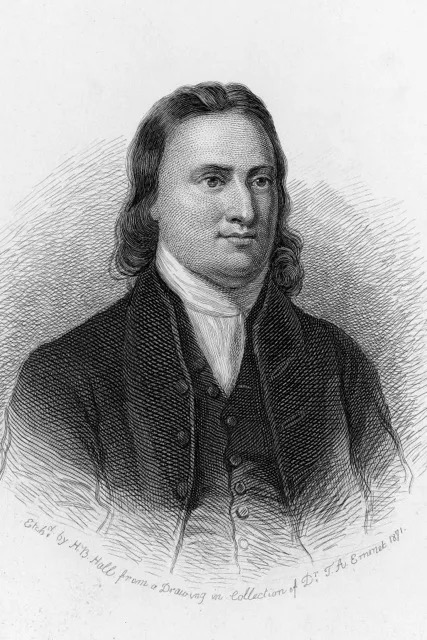
Button Gwinnet was born in 1735 in Gloucestershire, England, to Anne and the Reverend Samuel Gwinnett, a minister in the Church of England. After Gwinnett married and had three children, he sailed to Georgia in 1765 in search of better business opportunities.
After struggles with his merchant business, Gwinnett purchased St. Catherine’s Island off the coast of Georgia, near the booming port of Sunbury, where he became a planter. Gwinnett also became active in local Georgia politics, and was elected to the Commons House of Assembly in 1769. After personal and financial struggles, Gwinnett stepped back from the political scene. But when tensions rose with England, he re-entered the political arena and united coastal and rural dissidents. He was elected commander of Georgia’s Continental Battalion.
After signing the Declaration, Gwinnett returned to Georgia, where he was elected Speaker of the State Assembly and helped draft the state’s first constitution. He was also appointed the provisional president and commander in chief of Georgia, where he was responsible for the unsuccessful invasion of British East Florida.
The backlash from this failed invasion escalated a longstanding feud between Gwinnett and General Lachlan McIntosh, who offered a scathing criticism of Gwinnett’s handling of the invasion, calling him a “scoundrel and lying rascal.” These derogatory comments prompted an outraged Gwinnett to challenge McIntosh to a duel, and on the morning of May 16, 1777, the two men met in Sir James Wright’s Pasture, and standing just 12 feet apart, fired shots at each other. While both were hit, only Gwinnett’s wound would prove to be fatal. He died three days later.
I am a bit disappointed that the article doesn’t say whether Gwinnett’s family sailed to America with him, and what happened to them. I do know that there is a Gwinnett County in Georgia today, so his name lives on.
Stay tuned for the next installment!
 Calling-all-RushBabes