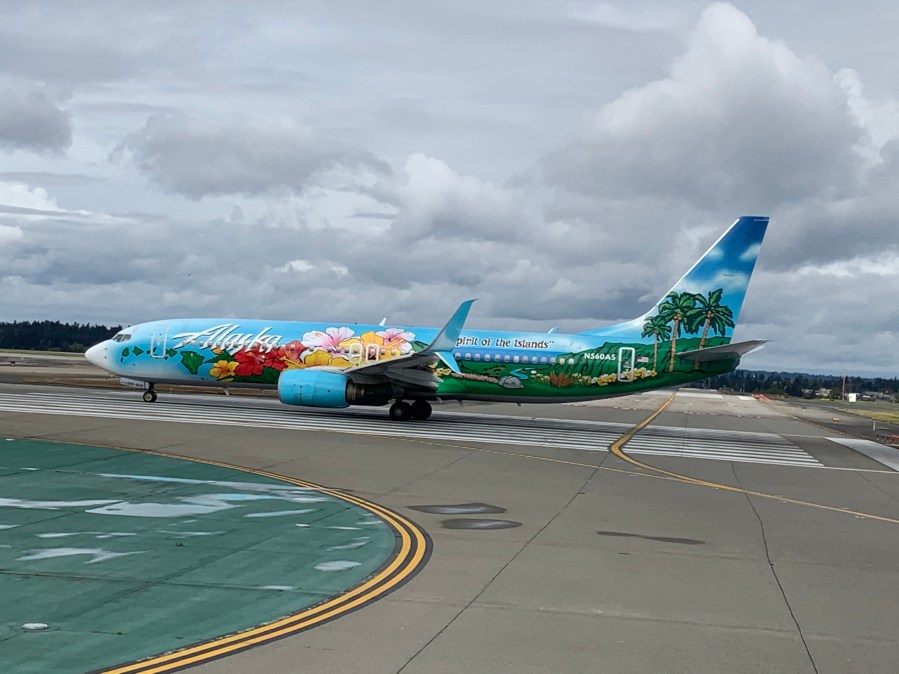
Anyone who follows the news at all will know that Boeing, a titan of aerospace and defense technology, has had a very difficult time the past few years. The difficulties with the 787 program, with its heavy outsourcing of production and assembly, brought the company a considerable amount of unwanted attention, as deadlines slipped and costs mounted. Boeing airplanes have had too many horrific accidents, two which brought down 737-MAX planes in foreign countries, with high loss of life. Boeing’s reputation has been brought low, dragged through the mud by observers worldwide.
Airbus, Boeing’s main competitor, has benefited greatly from Boeing’s travails, even in spite of its own problems with supply chains and quality hiccups. In 2020, when government restrictions on all kinds of travel knocked out many aerospace firms, Boeing suffered more than most. They had to let go thousands of long-term employees, from assemblers to engineers and other white-collar employees, making it difficult for them to recover when travel picked back up fairly quickly.
As the wife of a Boeing Lifer, who lost his 40-year job in 2020, I can tell you what Boeing’s underlying problem was, and continues to be. In 1997, Boeing merged with fellow aerospace manufacturer McDonnell-Douglas. This brought it a big Defense capability, with manufacturing plants and offices nationwide, and an aircraft manufacturer that mostly was subsumed into the Boeing plant structure. It also brought with it a different company mindset, born of years of dealing with the federal government; that was the emphasis on the “bean-counters”, Finance people whose reason for being was cost-management, and cost-cutting.
If you give it some thought, you will understand that a company whose major business is manufacturing passenger aircraft must put a huge emphasis on Safety; indeed, such a manufacturer (Boeing has build aircraft since the 1920s) must have a predominant Safety Culture. And Boeing had that, for the majority of its existence; its engineers and designers like my husband concentrated first and foremost on Safety, building their airframes to withstand all the forces on their metal tubes with people inside. But that merger with Douglas brought with it a change from a safety culture to a cost-management culture, with final decisions on design being made by Finance executives and not Engineering executives. Design and purchasing decisions were second-guessed by the bean-counters, and many engineers saw that their work didn’t seem quite as valuable as it had been when Boeing was its own company. This emphasis on financial goals was what led to the increase of out-sourcing production of airplane parts and systems, and even some design, to others. It led to the sale of part of the manufacturing to what became Spirit Aerosystems, which ultimately failed and had to be bought back this year.
So I have a modest proposal for how The Boeing Company might be able to improve its fortunes. Boeing is a public company, its shares owned by entities large and small, including its own employees who can buy company stock at a discount. The Finance orientation is brought about by that Public status, where Wall Street demands quarterly reports on the company’s health, both financial and otherwise. If the company’s profits lag, or it has an accident, the stock market is quick to sell its stock, reducing its market value, and taking its eye off the ball of building safe, sound aircraft for its customers. My Modest Proposal is for Boeing to decide that its survival requires that it “go private”, buying back all its stock either itself or with a deep-pocketed entity like private equity. Boeing as a private company would be able to go back to its Safety Culture, without having to worry about its stock price. To get funds for going private, it could sell off the pieces that no longer work for it, like the Space division which has been a big failure, and maybe Defense. Boeing needs to go back to its roots as an Engineering and Safety Airplane builder, so it can get back to its core competence-designing and building passenger aircraft for the traveling public, and freight aircraft for the many freight companies who carry high-value cargo around the world.
The way Boeing is going now, it looks like more and more of a big failure, and it doesn’t have to be that way. Boeing is a great company, with a storied history of building workhorse aircraft, and it can be again.
 Calling-all-RushBabes
Integrity, Technical Excellence, Quality of Product and Customer Support, and Treating All Employees Fairly. Those were the Principles, pre-merger. When you have those, you have a safe product that people want to buy and fly in. The bottom line of being able to stay in business and serving the flying public is taken care of. This is more of a mission mindset than one of maximizing profitability. Companies following this strategy tend to become household names and have longevity in business, more so than their competitors.
Interesting perspective. Boeing is a source of jobs on the commercial airplane building side here in SC.
This is still the most damning part of the Boeing story I have seen:
“…an institution that was in a perpetual state of unlearning all the lessons it had absorbed over a 90-year ascent to the pinnacle of global manufacturing. Like most neoliberal institutions, Boeing had come under the spell of a seductive new theory of “knowledge” that essentially reduced the whole concept to a combination of intellectual property, trade secrets, and data, discarding “thought” and “understanding” and “complex reasoning” possessed by a skilled and experienced workforce as essentially not worth the increased health care costs.”
From my perspective in and around similar cubicle farms, Boeing is not alone…other corporate catastrophes are barely hidden below the surface.
I want to amend my comment on ‘Treating All Employees Fairly.’ Actually, the Fourth Principle of the company is “People Are Our Key Resource: The company’s future depends on the dedication, the innovation, and the productivity of our employees. Each employee is to be treated with fairness, trust and respect.” Yes, the future certainly does depend on this, especially if there is to be sucess in that future.