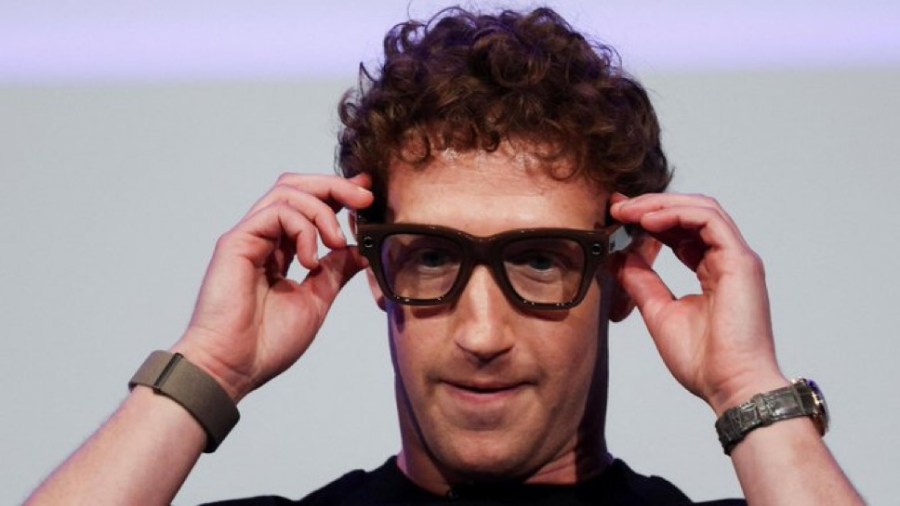
This story from today is alarming. Your entire life might be on-screen in Kenya, totally unbeknownst to you at all. And the glasses themselves might even be dangerous to its own users! If you thought Mark Zuckerberg and his AI systems were intrusive and even malevolent, you haven’t even seen the worst yet. I am copying this post in its entirety, and I will link to the original post at the end. No way would I ever buy this kind of device, and it makes me very uneasy to know that someone else might be exposing my own private life. I’m interested in hearing your reactions to this development.
JUST IN: Meta sold 7 million Ray-Ban smart glasses in 2025 alone.
Workers in Kenya are watching the footage.
Not metadata. Not anonymized clips. The actual videos. People undressing. People in bathrooms. People having sex. Bank cards. Medical documents.
The blurring is supposed to protect privacy. It fails constantly. The contractors see everything.
Here is the part that should stop you cold: You did not buy the glasses. You did not agree to the terms of service. You did not consent to anything. But if someone wearing Meta glasses walks into your bedroom, your bathroom, your doctor’s office, your home, a contractor on the other side of the world may be watching you right now.
The person wearing the glasses consented. Everyone else in the room did not.
Meta’s defense is that this is all disclosed in the privacy policy. They are technically correct. Buried in language so dense that 99% of users never read it. And even if they did, it would not matter, because the terms govern the wearer’s data. Not yours. You are not a party to the contract. You are the product being annotated.
Millions of AI-enabled cameras walking around in public. Recording constantly. Uploading to servers. Reviewed by humans earning a few dollars an hour to label your most intimate moments so the algorithm gets smarter.
This is not a bug. This is the business model.
The EU is already asking questions. MEPs submitted formal inquiries to the Commission this week demanding answers on GDPR compliance. The problem is obvious: European data protection law requires consent from data subjects. Bystanders are data subjects. Bystanders never consented. The entire architecture violates the regulation by design.
Meta’s response has been silence and a reference to terms of service that do not apply to the people actually being filmed.
Google Glass died because people called the wearers “Glassholes” and banned them from bars. Meta solved the social problem by making the glasses look normal. They did not solve the privacy problem. They hid it.
Seven million units sold in 2025. The installed base is accelerating. Every unit is a potential surveillance node operated by someone who may not understand what they are feeding into the system and reviewed by contractors who see everything the algorithm cannot process.
The question is not whether this becomes a scandal. The question is whether the scandal arrives before or after the glasses are on 50 million faces.
Watch the EU. If Brussels moves on GDPR enforcement, Meta faces a choice: disable human review in Europe and cripple the AI training pipeline, or accept fines that could reach billions. Neither outcome is priced into the stock.
The glasses are selling faster than ever.
The contractors keep watching.
And somewhere right now, someone you have never met is looking at footage of you that you never knew existed.
Do you want this freak in your bedroom, bathroom, or living room? Well, he has that ability now, along with his “researchers”.
 Calling-all-RushBabes