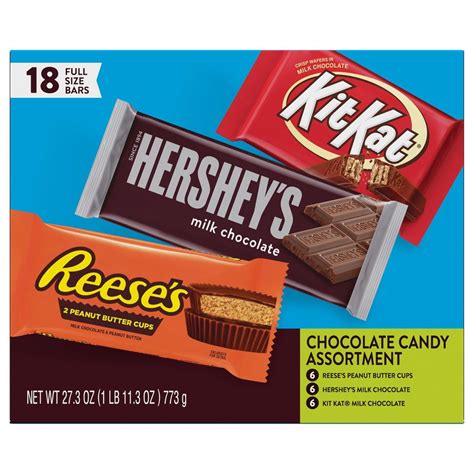
In case you hadn’t noticed, chocolate is getting much more expensive. It’s true that the cocoa market is becoming more volatile, mostly due to conditions in Ivory Coast, Africa. But those conditions aren’t terminal, and they go up and down. However, in America, chocolate makers like Hershey and Mars are embarking on a course of action that is very worrying. For years, to save costs and reduce volatility, they have been replacing the real cocoa in their candy with various “seed oils,” which are basically industrial lubricants processed to become food. Here’s what Sama Hoole has to say about seed oils.
1866: Cotton seeds are agricultural waste. After extracting cotton fiber, farmers are left with millions of tons of seeds containing oil that’s toxic to humans. Gossypol, a natural pesticide in cotton, makes the oil inedible. The seeds are fed to cattle in small amounts or simply discarded.
1900: Procter & Gamble is making candles and soap. They need cheap fats. Animal fats work but they’re expensive. Cotton seed oil is abundant and nearly worthless. If they could somehow make it edible, they’d have unlimited cheap raw material.
The process they develop is brutal. Extract the oil using chemical solvents. Heat to extreme temperatures to neutralise gossypol. Hydrogenate with pressurised hydrogen gas to make it solid at room temperature. Deodorise chemically to remove the rancid smell. Bleach to remove the grey color.
The result: Crisco. Crystallised cottonseed oil. Industrial textile waste transformed through chemical processing into something white and solid that looks like lard. They patent it in 1907, launch commercially in 1911.
Now they have a problem. Nobody wants to eat industrial waste that’s been chemically treated. Your grandmother cooks with lard and butter like humans have for thousands of years. Crisco needs to convince her that her traditional fats are deadly and this hydrogenated cotton-seed paste is better.
The marketing campaign is genius. They distribute free cookbooks with recipes specifically designed for Crisco. They sponsor cooking demonstrations. They target Jewish communities advertising Crisco as kosher: neither meat nor dairy. They run magazine adverts suggesting that modern, scientific families use Crisco while backwards rural people use lard.
But the real coup happens in 1948. The American Heart Association has $1,700 in their budget. They’re a tiny organisation. Procter & Gamble donates $1.7 million. Suddenly the AHA has funding, influence, and a major corporate sponsor who manufactures vegetable oil.
1961: The AHA issues their first dietary guidelines. Avoid saturated fat from animals. Replace it with vegetable oils. Recommended oils: Crisco, Wesson, and other seed oils. The conflict is blatant. The organization issuing health advice is funded by the company that profits when people follow that advice.
Nobody seems troubled by this. Newspapers report the guidelines as objective science. Doctors repeat them to patients. Government agencies adopt them into policy. Industrial cotton-seed oil, chemically extracted and hydrogenated, becomes “heart-healthy” while butter becomes “artery-clogging poison.”
1980s: Researchers discover that trans fats, created by hydrogenation, directly cause heart disease. They raise LDL, lower HDL, promote inflammation, and increase heart attack risk more than any other dietary fat. Crisco, as originally formulated, is catastrophically unhealthy. This takes 70 years to officially acknowledge.
Procter & Gamble’s response: Quietly reformulate without admission of error. Remove hydrogenation, keep selling seed oils, never acknowledge that their “heart-healthy” product spent seven decades actively causing the disease it claimed to prevent.
Modern seed oils remain. Soybean, canola, corn, safflower oils everywhere. Same chemical extraction process. Same high-temperature refining. Same oxidation problems. Just without hydrogenation so trans fats stay below regulatory thresholds.
These oils oxidise rapidly when heated. They integrate into cell membranes where they create inflammatory signalling for months or years. They’re rich in omega-6 fatty acids that promote inflammation. They’ve never existed in human diets at current consumption levels.
But they’re cheap. Profitable. And the food industry has spent a century convincing everyone they’re healthy. The alternative, admitting that industrial textile waste shouldn’t have been turned into food, would require acknowledging the last 110 years of dietary advice was fundamentally corrupted from the start.
Your great-grandmother cooked with lard because that’s what humans used for millennia. Then Procter & Gamble needed to sell soap alternatives and accidentally created the largest dietary change in human history.
We traded animal fats that built civilisations for factory waste that causes disease.
The soap company won. Your health lost.
So, here’s the new story. Replace cocoa with seed oils. Synthesize chocolate in the lab, but still call it chocolate.
Even the Wall Street Journal is now reporting that Chocolate in America tastes different, because chocolate ingredients are being replaced with oils They say because the world is “getting warmer” the pharmaceutical industry is creating a technique to make artificial chocolate in a lab.
They’re reporting that our most popular chocolate candy is currently all being reformulated to remove cocoa and replace it with cheaper seed oils, yet prices are still up 44% since 2021 So for now we have seed oils, but coming in the future we’ll have lab grown chocolate… if this is the future, I’ll just skip chocolate all together Why are we accepting this. There has to be other solution than manufacturing artificial food in a lab.
We need NATURAL food options, not this bioengineered junk Here are the top 10 chop plates that have already gone through reformulation, they’re all mainly Hershey products 1. Mr. Goodbar – “milk chocolate with peanuts” to “chocolate candy with peanuts” 2. Almond Joy – Now labeled a “coconut and almond chocolate candy bar” 3. Rolo – Now “rich chocolate candy” instead of milk chocolate 4. Reese’s Take5 5. Reese’s Fast Break 6. Reese’s seasonal shaped items now use “chocolate candy and peanut butter crème” instead of milk chocolate + peanut butter. 7. Whatchamacallit 8. Krackel 9. Milk Duds 10. Hershey’s Kissables and some other secondary seasonal Hershey items.
Be on the lookout.
Do not totally despair. There are alternatives. Here are some of the good comments on those alternatives. Starting with America.
Once you’ve had real chocolate from Hawaii or the European countries — Belgium, France, Switzerland, Germany, Austria, & Italy — store-bought American “chocolate” is un-consumable.
My daughter and o tested chocolate on each country we went to in Europe to determine which one had the best chocolate… answer was they all did!
Hawaii is the only state (I believe) where cocoa beans grow… there’s some local growers that have shops downtown Hilo selling local chocolate that is worth every dollar! 🤎
A.) Why Would the Pharmaceutical Companies Be Making Lab Chocolate ?= Is It A Prescription ?
And
B.) Why I only Buy Dark Chocolate from Germany
& A few European Companies
If I want a Small Treat.Seems Chocolate Could Grow In Florida 🤔🌴
Maybe a boycott of Hershey, who is the biggest offender so far, might help them see the light. We also need to shout to the world about the harmfulness of seed oils and lab-made “food.” If there’s no market for it, it won’t be made.

