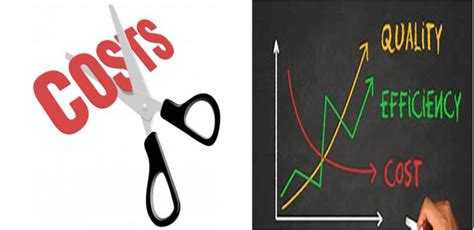
Just recently, a new guy I follow on X did a very enlightening post on Windows 11, and how Microsoft succumbed to the trend toward the bean-counters running the show. Reproduced entirely below, with link to original X post at the bottom. He connects all the dots leading to the short-circuiting of the process of updating a huge software package. See if you don’t agree.
Hall of Shame: Windows 11 When Profit Replaced Product A Hall of Shame Case Study in Intellectual Bankruptcy Windows 11 marked the moment a globally dominant platform began showing the consequences of profit-first decision making. At its core, this story begins with the deliberate displacement of American product labor.
Engineers, QA staff, and support professionals who had spent years and decades building, maintaining, and safeguarding Windows were treated as a cost problem to be solved rather than a national asset to be preserved. What followed was predictable. When financial leadership optimizes a legacy platform by removing the people most intimate with it, the harm does not dissipate. It materializes in degraded quality, broken trust, security exposure, and long-term damage to the country’s industrial and technological base. This is a story about how profit replaced product, how stewardship was abandoned, and how American labor that built and sustained the platform was displaced, forcing users, shareholders, and government institutions to carry the consequences in the form of instability, risk, and lost capability.
The Betrayal A betrayal of stewardship, by folks who thought they were superior and had convinced themselves they could do just as good or an even better job than Americans. The defensible argument is simple, and it mirrors every Hall of Shame case to date: • Windows exists because decades of U.S.-based product craftsmanship built it • Finance treated that craftsmanship like overhead • Cost cutting displaced the people most intimate with the product • Accountability diffused, quality fell, and risk increased • Users, shareholders, and the national industrial base paid the price through degraded quality, security exposure, and loss of domestic capability That is a betrayal of the country, customers, and workforce that created the platform’s dominance.
Case Study: Microsoft Windows 11 This is a story about priorities, more than personalities. Windows 11 is the result of a deliberate shift away from product intimacy and toward financial optimization, driven largely by financial leadership incentives that prioritize short-term cost savings over long-term product integrity. The people who knew Windows best, who lived with its tradeoffs, edge cases, and long‑term users, were reduced, displaced, or removed. It would have been bad enough if they were not also disparaged as they were replaced. In their place came a distributed execution model optimized for cost, velocity metrics, and compliance. Zero thought was given to the actual talent, dedication, work ethic, or passion of those replaced. This sequence matters. It has a name.
Intellectual bankruptcy. And it is rarely new. It is usually a repeat of failures the industry has already lived through.
Step Zero: They Ignored the Warnings The playbook was already written. Across multiple industries, aggressive offshoring and contractor-heavy development has repeatedly produced the same outcomes: weaker quality control, fragmented ownership, slower defect discovery, and a slow bleed of institutional memory. A well-known example is aviation software, where reporting has linked cost-driven outsourcing and the dismissal of senior engineering judgment to downstream quality and safety failures. Microsoft did not need to guess how this ends. It had decades of evidence that complex, long-lived systems punish organizations that treat core engineering capability as a commodity.
Intellectual Bankruptcy Begins Intellectual bankruptcy occurs when an organization sheds so much of its core, product-intimate talent that the remaining system can no longer reason, adapt, or self-correct. What is left is talentless, non-innovative worker bees that have limited understanding of the system they are responsible for. It is not just about headcount – It is also about a loss of understanding.
Step One: Remove the People Closest to the Product As Windows 11 was being designed and rolled out, Microsoft reduced U.S.-based engineering, QA, and support roles that had long-term, hands-on familiarity with the platform. These were predominantly American workers embedded in the product for years or decades. These were not interchangeable resources- warm bodies. They were institutional memory. From a financial perspective, they appeared expensive, slow, and redundant. From a product perspective, they were the accumulated skill, talent, and experience that made Windows viable in the first place. The financial side of the organization treated this knowledge as an operating cost rather than a strategic asset. In fact, quality was seen as an enemy of schedule instead of protection of the brand. At the same time, execution increasingly shifted toward offshore teams and visa‑tied labor structures optimized for lower cost and higher managerial control. This was not neutral reallocation; it was the direct displacement of domestic product labor in favor of cheaper, more controllable alternatives. Offshoring quality- seen as a success to achieving schedule, as only the most incompetent would think. These replacements were often less experienced with Windows as a platform, less embedded in its historical constraints, and less empowered to challenge flawed decisions. They were however, likely connected to people that put them into their positions and helped them draw a paycheck. That gap in experience and authority accelerated the intellectual drain. This was the first break in the system.
Step Two: Finance Breaks the Feedback Loop Once cost control becomes the primary objective, feedback itself becomes a liability. Engineering dissent delays schedules. Quality concerns increase spend. User complaints threaten timelines. Under a finance-led model, these signals are suppressed, reframed, or ignored. Product intimacy depends on fast, honest feedback. When teams are distributed across time zones, distant from end users, and structurally discouraged from escalating bad news, the feedback loop collapses. Under this model: • Defects surface later • UX friction is normalized • Edge cases are ignored • Ownership becomes abstract Windows 11 was built inside this environment.
Step Three: Leadership Becomes Expendable Panos Panay was the visible advocate for Windows and Surface. His role was not just vision, but resistance. He pushed back on decisions that harmed user trust and long-term coherence. When the organization pivoted toward profit protection over product stewardship, that role became incompatible. Panay’s exit was not the cause of failure. It was the signal that the system had already chosen.
Step Four: Predictable Product Failure What followed was purely mechanical. • Hardware requirements that invalidated millions of working PCs • Performance regressions and quality issues at launch • UX decisions disconnected from enterprise and legacy users • Fragmented support ownership and slow remediation • Declining trust among core Windows users These outcomes directly reflect a loss of product intimacy.
Step Four-A: The Superiority Claim Fails The displacement of American workers was justified with a simple claim: offshore and visa-based labor would be better, cheaper, and sustainable for years to come. Many were convince they were more talented and gifted than their American counterparts and let everyone know it as they would point at it and gloat on social media. Windows 11 shows that claim did not hold. Instead of long-term gains, Microsoft inherited a growing list of problems that cost real money to fix: remediation work, security response, forced hardware upgrades, enterprise disruption, customer churn, and lost trust. Strange nobody was gloating about how much money it was costing or the turnover in personnel constantly taking place as a result. Any labor savings achieved on paper were quickly consumed by downstream damage. Those costs did not disappear. They showed up later, spread across customers, shareholders, and government systems, and they are likely measured in the billions over time. This was a failed bet when everyone thought it was going to be a success story.
Step Five: National Security and Sovereignty Risk If you are a shareholder, a Windows user, or a government agency that relies on Microsoft, this is where the story becomes disturbing.
What This Means for Stakeholders For shareholders: A culture that produces “preventable” security failures is not a technical problem. It is a leadership and governance failure. That translates directly into valuation risk, regulatory exposure, and long-term erosion of trust. For users: Windows 11 demanded hardware upgrades, workflow disruption, and forced adoption. Pair that with degraded quality and public security failures, and the message becomes clear: users paid more for less stewardship.
For government and critical infrastructure: Windows and Microsoft cloud platforms are embedded in U.S. government operations and national infrastructure. When security depth and institutional memory are treated as overhead, breaches stop being IT incidents and become sovereignty risks. A U.S. government review board concluded that a major Microsoft cloud email intrusion impacting U.S. government and other organizations was preventable, and criticized Microsoft’s security culture and practices. That is the real Hall of Shame consequence. When the steward of critical digital infrastructure embraces intellectual bankruptcy, the risk is no longer cosmetic.
It is strategic. • Breaches become national security issues • Trust becomes a procurement issue • Security debt becomes a shareholder liability When stewardship collapses, the country is left with degraded infrastructure, elevated security risk, and hollowed-out domestic capability.
The Pattern That Keeps Repeating: Displacement of American Labor- costs far outpacing the savings This is what happens when financial authority operates without respect for accumulated skill, talent, and experience. This is intellectual bankruptcy in action. Offshore‑heavy, visa‑dependent execution models do not fail because of talent. They fail because of incentives.
They reward: • Compliance over craftsmanship • Metrics over judgment • Silence over escalation • Cost savings over user trust Complex, long‑lived platforms cannot survive under those incentives.
Hall of Shame Conclusion Windows 11 failed for a simple reason. Profit was prioritized over product. The people who understood Windows were removed. The feedback loop was broken. Leadership that defended users became expendable. Execution optimized for cost replaced stewardship. The result was inevitable.
Hall of Shame Entry Microsoft Windows 11 When profit replaces product, failure is not a surprise. It is the plan. Citations Bloomberg News. (2019, June 28). Boeing’s 737 Max software outsourced to $9-an-hour engineers. Bloomberg. Cyber Safety Review Board. (2024, April 2). Cyber Safety Review Board releases report on Microsoft Online Exchange incident from Summer 2023 (Press release). U.S. Department of Homeland Security. Reuters. (2024, April 2). Cyber board says Chinese hack of US officials was “preventable”. Reuters. Associated Press. (2024, April 2). Scathing federal report rips Microsoft for shoddy security, insincerity in response to Chinese hack. Associated Press. Intellectual Bankruptcy was a phrase first coined by the Chief nearly two decades ago to describe a talentless, non – innovative site that insisted repeatedly of making decision for profit that put them in distress and caused the Chief to constantly have to go to site and tell them to ‘follow the fundamentals of good engineering and business practices.’
RushBabe49 has had experience with this phenomenon. First, Hubby is a Boeing Lifer, and many times at the dinner table we have discussed what happened to the company after the merger with McDonnell-Douglas. Before the merger, Boeing had a dominant Safety Culture, with engineering take precedence over all other company goals and values. They manufacture huge aircraft, which carry hundreds of passengers and crew all over the world. One engineering or quality error can mean the loss of hundreds of human lives, both on the aircraft and on the ground. After the merger, that Safety Culture was replaced by Cost-Cutting Culture. That meant that all company processes, procedures, and activities were judged first by cost to the company, later by safety effectiveness. With predictable results. The company outsourced many of its processes overseas, including design work, to please Finance and overseas customers. The 787 program, which outsourced huge numbers of jobs to sub-contractors, suffered from delays, quality problems, and cost overruns. It was delayed multiple times, and caused no end of frustration. We have all seen in the news how Boeing was nearly brought to its knees by the 737-Max crashes and aftermath.
Also, in my last job before retirement, I noticed that most of the IT help desk staff became Indian, both at the site and remotely. I have been following closely the H1B visa issue, and the discovery that many IT functions at many companies are being outsourced to India. I also learned that once Indians take over a department, they only tend to hire more Indians, and Americans are laid off or never hired in the first place. That’s a trend to be watched closely.
Mr. Chief Engineer above has provided a very valuable service to the public by recording and evaluating the issues with Windows 11, and we owe him a debt of gratitude.
 Calling-all-RushBabes
Pingback: Instapundit » Blog Archive » HOW THINGS KEEP FALLING APART: The Financialization of Everything: Engineer discusses Windows 11;
I was at McDonnell Douglas right before the implosion. When people warned him that outsourcing would hurt the company, the CEO said ~”what this company needs is fewer engineers and more accountants.” The result was inevitable.
I don’t disagree with the major premise, and I could cite other businesses hollowed out by the same processes. That said, I had never considered Windows an exemplar of stability or transparency. It was always a bucket of sludge. They got a whole acronym – BSOD – in honor of the fallout. Home grown sludge but sludge. Its main virtues were ubiquity and familiarity. To be fair, it’s been a long time since I used it more than peripherally.
If you pull up a range of top Indian technical schools and look at how many their engineering and IT programs hold, per year, and then extrapolate to the whole country, you will conclude that the vast vast majority of H1Bs didn’t actually go through those programs (few of them could, due to very limited space), and instead by bought their degree for a few hundred bucks from a professor or administrator who had access to the school’s student database.
That’s why they can’t seem to program or design worth spit, and make endless excuses for everything. Currently the Federal government is investigated massive numbers of Indian nurses who got their degrees the same way, and then we’ll move on to check doctors, whose degrees are also sold for cheap over there.
They only hire other Indians because they get Izzat back home (and here among their fellow Indians) for being the big cheese. But due to Izzat, they can never admit their wrong or that they don’t know something, because then they’d lose face, which would mean their clan loses face. They are incapable of working cooperatively in groups for that same reason. Thus the state of their country.
Yep! Thank you !
I was a contractor/consultant to DaVita for 20 years. When I started in 2002, the IT department was completely American. When DaVita acquired Gambro in 2006, they put an Indian in charge of all IT development and maintenance. Total IT staff at the time was about 375 people.
By 2017, 90+% of DaVita’s IT staff were either offshore workers in India or Indians on H1-B visas, hired through body-shop “contracting” companies in the USA. From 2012 onward, no project was completed on budget or on time, regardless of its scope.
I have screen shots of Zoom calls with 20 participants: me and 19 Indians.
In general, most of the Indians hired can speak English, although a good proportion have accents so thick that you can’t understand much of what they say. However, almost none of the Indians can WRITE cogent English, and so they don’t. None of the programs have comments, and what technical documentation that is provided is haphazard and 4th-rate quality.
The coding quality is second-rate, at best. There is no substantive coding review or education, because all of the first-line technical managers are ALSO Indian, and they have long embraced the same bad technical habits — including the complete absence of documentation — that their younger cohorts pursue.
There are constant, innumerable conference calls to go over minute issues because nobody in the company has the capability of writing a holistic, comprehensible design document.
When a project needs an additional hand, the manager is instructed to contact one of the body shops, who arranges a phone interview with a candidate, invariably Indian. There is no guarantee that the person on the phone interview is the same person as the one who shows up to work (and I personally experienced at least one instance where the contracting company put a skilled person on the phone interview, then sent a completely unskilled person to the work site).
Any semblance of quality has long been discarded in favor of reducing costs and maintaining tribal solidarity. And the amount of outright fraud in the H1-B and L-1 visa programs is overwhelming; Trump’s intention of requiring a $100,000 payment for H1-B visas is a (very) small step in the right direction, but so much more has to be done.
Stories are coming out about Indian diploma mills, where many people hired by American companies bought fake degrees. And once an Indian gets to the supervisory ranks, only Indians are hired after that. What a racket! Thanks so much for your comment.
I’m a retired Boeing engineer. To save costs, Boeing Defense moved AWACS/E-6 support from Seattle to Oklahoma City. All the documents moved there, but the people stay in Puget Sound. The OKC people had no clue, they were constantly calling Seattle people for help. They got very limited help; those airplanes were not our responsibility anymore.
Remember the Moscow Design Center? We do. Hubby was forced to retire in 2020. So was I, from a Boeing supplier.
Worth noting Windows quality assurance was immediately targeted after Satya Nadella became CEO, especially the full experience people who looked at how the whole system worked for a user. Developers were expected to pick up the burden.