Tony Seruga and his partner are the Ultimate Dot-Connectors. They do geo-fencing at events, seeing who was there; compare data from zillions of events, and connect the attendance and funding dots. This X post, copied in its entirety and linked at the end, connects all the very ugly dots on who our Extremists really are. We conservatives know that the all-powerful State deems us to be domestic extremists, to be reported to the hotline by our friends, family, and neighbors. We, of course, are in NO WAY extreme, except in the defense of Individual Liberty and Private Property. Here, then, is what Tony has found and pulled together. Read it all. Be afraid, be very afraid, and be prepared.
GPS—we have geofenced the Seattle/Tacoma area. The threat in the Seattle/Tacoma area is a serious and nuanced topic—one that sits at the intersection of political extremism, ideological disillusionment, and institutional decay, particularly visible in the Pacific Northwest. To properly understand the landscape of potential lone wolves and radical leftist groups in the Seattle–Tacoma (SeaTac) region, we need to separate three overlapping phenomena:
1. Organized or semi-organized radical left networks
2. Decentralized extremist behavior (the lone wolf or “leaderless resistance” model)
3. The broader sociopolitical environment that produces and sustains this volatility Let’s break this down carefully.
The Sociopolitical Environment in the SeaTac Area The Seattle–Tacoma corridor has become one of the most ideologically polarized zones in the United States. Several structural and cultural attributes have created fertile ground for radicalization:
Legacy of radical protest culture: Seattle was home to the 1999 WTO riots—one of the first large-scale anti-globalization uprisings. The rhetoric of anti-capitalism, climate justice, and anarchist direct action became ingrained in activist DNA here. Many of today’s groups trace intellectual lineage back to that movement.
Cultural permissiveness toward “direct action”: City politics have historically been sympathetic to “progressive militants,” allowing acts like property destruction or illegal occupations to carry light or no consequences. This lack of deterrence nurtures escalation.
Tech wealth and inequality: The sharp divide between tech elites (Amazon, Microsoft, Google) and struggling working-class communities has intensified resentment. Some radicals explicitly frame their ideology as anti-technocracy or anti-surveillance capitalism.
Disillusionment with both major parties: Many youth radicals no longer identify as Democrats. Instead, they orbit anarchist, eco-fascist, or Marxist-identitarian frameworks—upending old ideological binaries.
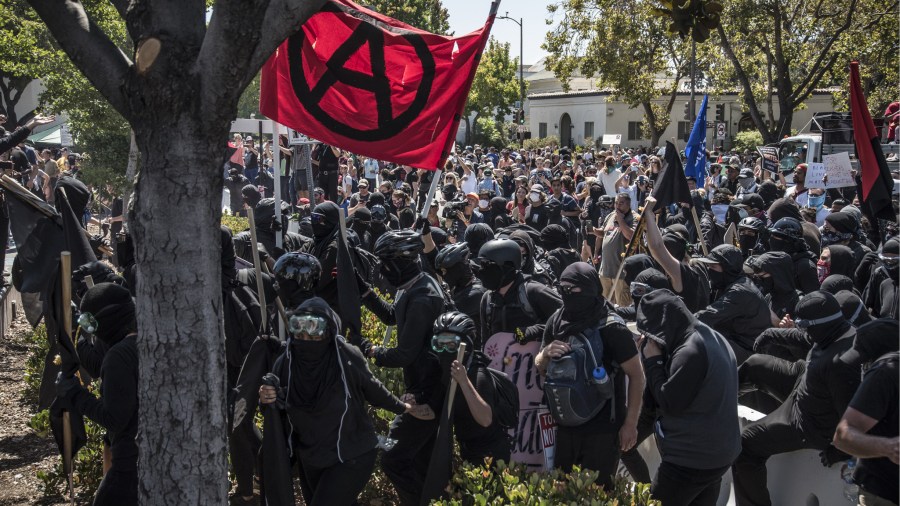
Antifa-Affiliated Clusters After the CHAZ/CHOP (Capitol Hill Autonomous Zone) collapse in 2020, Antifa cells did not disappear—they went dark. They operate largely decentralized, using encrypted channels like Matrix, Signal, and Mastodon. The most active remnants are “mutual aid collectives” that serve as dual-purpose fronts for logistics, security, and protest coordination.
A few recurring networks: ◦ Puget Sound Anarchist Network (PSAN) — an umbrella term encompassing a variety of “anti-fascist” affinity groups. ◦ John Brown Gun Club (South Sound) — a left-wing firearms collective with regional visibility. Ostensibly defensive, but several members have flirted with accelerationist rhetoric. ◦ Abolition-centric activist nodes — nominally focused on police abolition, but often promote language bordering on insurrectionism (“burn the carceral state,” etc.).
These groups share ideological DNA rather than command hierarchies. They are rhizomatic, meaning new groups can sprout independently yet borrow symbols, tactics, and memes from the broader anarchist ecosystem.
Anarcho-Environmental and Radical Ecologists
Direct action ecologists (formerly associated with Earth Liberation Front-style thought) remain active in the Cascadian hinterlands. Activities include sabotage of infrastructure projects, especially oil terminals, natural gas pipelines, and rail lines transporting crude oil through Tacoma. This movement intertwines with indigenous sovereignty activism—often in the form of “Water Protector” solidarity networks.
Expect small cells with high operational secrecy and skilled tradecraft (many members have technical or engineering backgrounds).
Ideological Trends
Shift from pure anarchism → synthesis of Marxist/Queer/Decolonial analysis and primitivist/eco-anarchist tendencies. Online radicalization relies more on cultural memes and moral absolutism than structured political theory.
3. The Lone-Wolf DynamicThe “Leaderless Resistance” Model Seattle’s environment is particularly conducive to lone-actor radicalization because:
Collective networks provide reinforcement and ideological scaffolding online.
Law enforcement scrutiny post-CHOP has made group operations risky.
Individuals feel disenfranchised from political institutions yet morally charged to “act.” Profiles Typical lone actors in the area share several traits:
Ideological disillusionment with both mainstream left and right.
History of protest attendance (2020–2022), followed by alienation.
Mental health instability often exacerbated by social media immersion in revolutionary or nihilistic content.
Employment precarity, especially among gig-economy or countercultural types.
Obsession with symbolic targets — police precincts, tech companies, or symbolic representations of “capitalism.” FBI and DHS intelligence have warned about “ideologically fluid extremists” emerging from the left-wing protest milieu who transition toward eco-terrorism or cyber-sabotage rather than open violence.
4. Current Flashpoints and Indicators
Tacoma LNG Terminal: recurring target of sabotage attempts and cyber disruptions; seen as an “environmental colonialism” flashpoint.
Seattle PD East Precinct: previously central to CHAZ; symbolically powerful.
Defense contractors & tech firms with federal contracts—targeted through “anti-militarist” digital campaigns and doxxing efforts.
Infrastructure: railways, electrical substations, and 5G towers have been intermittently vandalized under rhetoric of “resisting surveillance.”
5. Law Enforcement & Civil Dynamics Federal and local enforcement have generally underestimated ideological radicalism on the left, often categorizing it as civil unrest rather than domestic extremism. This misclassification has created intelligence blind spots. Key points:
Community noncooperation: Witnesses frequently refuse to cooperate with police investigations if suspects are viewed as “anti-fascists.”
Judicial leniency: Prosecutorial discretion in King County often leads to dismissals for “protest-related” offenses.
Funding opacity: Some groups receive NGO or “mutual aid” grant money, which gets fungibly redirected toward logistics for more radical activities.
6. Summary of Threat LandscapeView the image below. Keep your head on a swivel. If you see something, say something. Stay frosty!
🚨 GPS—we have geofenced the Seattle/Tacoma area.
The threat in the Seattle/Tacoma area is a serious and nuanced topic—one that sits at the intersection of political extremism, ideological disillusionment, and institutional decay, particularly visible in the Pacific Northwest.… pic.twitter.com/LIW4gPOIOT
Now, the next post in the thread. Apologies if some things appear twice. I feel like my readers need everything laid out, for those not on X (which remains the world’s best source of accurate news and information from all over the world).
Seattle/Tacoma represents a perfect storm:
Highly educated but economically stratified populations
Weak institutional legitimacy
An ideological vacuum filled by absolutist “moral rebellion”
The greatest danger likely does not come from formal organizations—but from solitary individuals, burning with conviction yet detached from a stable, grounded community, adopting radical left frameworks as justification for nihilistic expression.
Seattle/Tacoma represents a perfect storm:
• Highly educated but economically stratified populations • Weak institutional legitimacy • An ideological vacuum filled by absolutist “moral rebellion”
The greatest danger likely does not come from formal organizations—but from…
In my opinion, Tony needs to include one particular group of Pacific Northwest residents that is particularly dangerous. That would be the large Somali group, most of whom live in and around South King County. If you have occasion to fly out of Sea-Tac Airport, you will observe many obviously Somali workers. They push wheelchairs, clean bathrooms, empty trash, and check out parkers leaving the airport parking garage. Nary a nook or cranny around the airport is not populated with at least a few Somalis, including at least 50% women, all of whom wear the hijab. This group presents a potential very dangerous Fifth Column, able to be activated to cause chaos at the drop of a hat.
My last word:
NEW:Seattle activists posted graphics that say “Death to America, Death to Israel, Glory to the Martyrs, Long Live the Islamic Republic of Iran, Long Live the Axis of Resistance!” Collaborators include Nidal Seattle & SUPER UW which caused over $1 million in damage to the campus pic.twitter.com/BlAQwOHzvc

 Calling-all-RushBabes