Here are two different takes on the life of Richard Stockton of New Jersey, someone who suffered for his new country before it became a country.
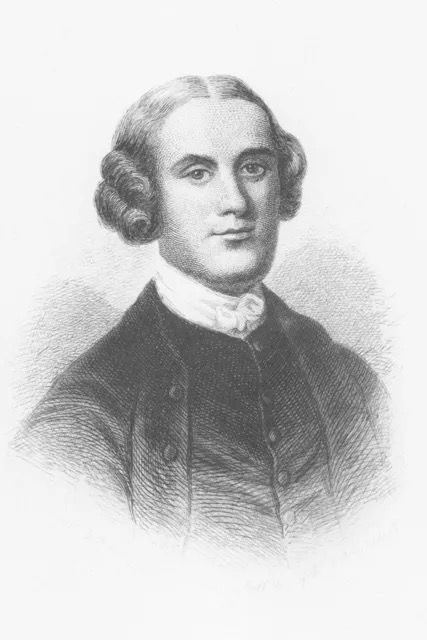
Richard Stockton was born on October 1, 1730, in Princeton, New Jersey. He earned a Bachelor of Arts from the College of New Jersey, now Princeton University, completed a legal apprenticeship, and was admitted to the bar in 1754.
In 1755, Stockton married the poet Annis Boudinot, with whom he had six children. His son Richard would go on to become a Representative and Senator, and he was father-in-law to Benjamin Rush.
Stockton achieved prominence as a lawyer, and was appointed to the New Jersey Executive Council in 1768, and later to the colony’s Supreme Court in 1774. Stockton served as a trustee of the college for 24 years and helped secure the Princeton presidency of the Rev. John Witherspoon.
The Stamp Act crisis of 1765 led him to question Parliament’s control over the colonies, and by 1774, he advocated for colonial self-rule under the Crown. Though known as a moderate, his dedication to the cause of American independence intensified, and he was elected to the Second Continental Congress in 1776.
In November 1776, while attempting to evacuate his family from Princeton, he was captured by British forces at Perth Amboy, New Jersey, and imprisoned in New York. Treated with inhumane severity, he was released in the early days of 1777 in poor health to discover British troops had occupied and partially burned his home. He died of cancer on February 28, 1781, at the age of 50.
Next, a slightly different viewpoint.
This signer of the Declaration of Independence was hunted down, dragged from a friend’s house in the dead of night, and thrown into one of the most brutal prisons of the war. What the British did to him is one of the darkest stories of the founding. Meet Richard Stockton. Stockton was New Jersey royalty, in the good sense.
Born in 1730 in Princeton, he was one of the most brilliant and respected lawyers in all of the colonies, wealthy, cultured, master of a beautiful estate called Morven. He had a golden life and every reason to keep his head down. He didn’t. He became the first New Jersey delegate to sign the Declaration of Independence in 1776, knowing exactly what that name would cost if the revolution failed. For him, it failed fast and personally. In late 1776, as the British swept through New Jersey, Loyalists betrayed his location. British forces seized him at the home of a friend and hauled him away. He wasn’t treated like a gentleman prisoner. He was thrown into the notorious Provost jail, a place designed to break men.
Prisoners there were starved. They froze. Snow and rain blew through shattered windows onto sick and dying men. He was deliberately abused and left to rot. And here is the human truth of it, the part that makes his story haunt you. Under that torment, cold, starving, and broken, Richard Stockton did what most of us can’t honestly swear we wouldn’t. He cracked. To survive, he signed an oath to the crown. One of the men who signed the Declaration of Independence was tortured until he recanted it. But that’s not where his story ends. After his release he pulled himself back and reaffirmed his loyalty to New Jersey and the cause, publicly recommitting himself to the country he’d helped found.
He chose America again, on the far side of hell. The British had also destroyed his life while they held him. They ransacked Morven. They burned his papers and his library, seized his livestock, and wrecked his fortune. He came home to ruins, in shattered health. Then the final cruelty. Stockton developed cancer of the lip that spread to his throat, and he spent his last years in constant pain. He died in 1781, one of the earliest signers to die, broke and suffering, having given his wealth, his health, and very nearly his spirit. A brilliant man who signed for freedom, was tortured for it, broke under it, chose it again anyway, and lost almost everything. Richard Stockton. Proof that courage sometimes means standing back up after you’ve been broken.
I wonder how many living descendants Stockton has today in America?

