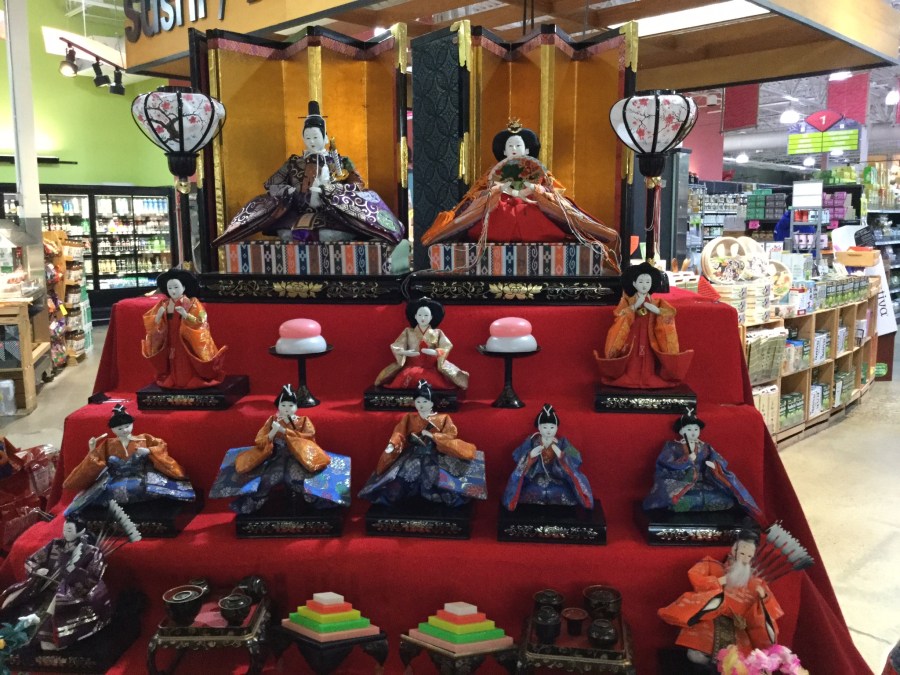
Most people are aware of the Japanese Culture that is thousands of years old, and governs the behavior of most Japanese people even today. The excessive politeness, the bowing to everyone, speaking softly at all times, the infrastructure that works every time (cars and trains in particular), the beautiful temples, and the cleanliness and lack of crime in big cities. Everyone has heard of the chivalry of the Samurai, and how many Japanese are so afraid of losing face that they will commit suicide before bringing shame upon themselves or their families. And literally everyone knows how American culture is exactly the opposite.
The Tales for Today come mostly from Japan, and predominantly from one X account whom I follow. He posts heartwarming stories every day. Here are some. It turns out that not only can We learn from Them, but that learning does go both ways. See if you don’t agree.
n 1994, my uncle opened an eleven-seat sushi counter in Little Rock, Arkansas, and hung ten rules on the wall.
The rules of a proper Tokyo sushi counter. Where you speak softly. Where the chef is a priest and the fish is the sermon.
Arkansas has broken every single one.
He never took the list down. He just crossed out each rule, by hand, and wrote underneath what Arkansas taught him instead.
Here it is.
Eat each piece in one bite.
Crossed out. Underneath: “Arkansas eats it in three bites and reviews each one out loud. ‘Oh, that’s good. Oh, that’s GOOD. Tets, what did you DO.'”
(His name is Tetsuo. He has been “Tets” since 1994. He did not agree to this.)
Never mix wasabi into the soy sauce.
Crossed out: “They stir it into a gray paste and call it ‘the slurry.’ I watched for ten years. Then I stopped watching. I am a calmer man.”
No tipping. This is the Japanese way.
Crossed out: “When I refuse their money, they hide it. Under the plate. Inside the soy sauce bottle. Once, in my shoe. I still do not know when they got to my shoe.”
The counter is a place of quiet focus.
Crossed out: “The counter is where I learn the name of everyone’s dog. I know 212 dogs. I have met four.”
Trust the chef.
Crossed out: “They trust me completely. Then they ask if I can add cream cheese. I can. It is called the Little Rock Roll. It outsells everything I learned in Tokyo.”
No substitutions.
Crossed out: “Mrs. Hollister is allergic to fish. She has come every Friday for nineteen years. Cucumber roll. Miso soup. She tells me I need a haircut. I stopped asking why she comes. I know why she comes.”
The chef does not shake hands.
Crossed out: “Every man in Arkansas shakes my hand on the way out. I wash my hands 140 times a night. Worth it.”
Do not ask the chef personal questions.
Crossed out: “Big Jim has asked me if I’m happy every Friday since 1998. In Japan, nobody had ever asked me that. The first time, I didn’t know the answer. Now I say yes. It’s true now.”
The chef works alone.
Crossed out: “In 2011, I had back surgery. I was gone six weeks. When I came back, the restaurant was spotless, the floors were waxed, and there were fresh flowers on the counter. The regulars had a key. Nobody will tell me who made the key.”
Never let a customer behind the counter.
He crossed this one out last. He needed a whole paragraph.
“On my 70th birthday, eleven regulars walked behind my counter, put on my aprons, and made me sushi.
It was the worst sushi ever made in the state of Arkansas.
Big Jim’s roll had a Slim Jim in it. Mrs. Hollister’s was mostly cucumber and prayer. Somebody used a cheese grater. Nobody will tell me on what.
They served it on my plates. With my soy sauce. And they stood behind my counter and watched me eat, the way I have watched them for thirty years.
I ate every piece. One bite each.
Then I bowed to them. Eleven people in my aprons bowed back, at eleven different angles.”
My uncle is 71. He is still there, six nights a week.
The list is still on the wall. All ten rules, crossed out.
Last year, someone added an eleventh at the bottom, in black marker.
Nobody will say who wrote it. It is Big Jim’s handwriting.
Tets stays.
In 1994, my uncle opened an eleven-seat sushi counter in Little Rock, Arkansas, and hung ten rules on the wall.
The rules of a proper Tokyo sushi counter. Where you speak softly. Where the chef is a priest and the fish is the sermon.
Here’s a service in Japan, that probably could exist nowhere else in the world.
Long layover in Tokyo? A local will show you their town for free.
At Narita Airport, over 200 volunteers who live nearby, some of them students, have signed up to take travelers out of the airport and into their hometowns. The program came back on October 1 after stopping for COVID.
You book online. An English-speaking guide meets you.
A little later you’re at a temple over 1,000 years old, on a street that smells like grilled eel. Or walking through a village where they film samurai dramas, in a rented summer kimono. Or inside a sake brewery.
The guide costs nothing. You just pay your own train fare and lunch. Plan on 3 to 5 hours.
It’s called the Narita Airport Transit & Stay Program.
Five hours at the gate, or five hours with a local in Japan?
Long layover in Tokyo? A local will show you their town for free.
At Narita Airport, over 200 volunteers who live nearby, some of them students, have signed up to take travelers out of the airport and into their hometowns. The program came back on October 1 after stopping for…
This tale is very special, and is a very good demonstration of Japanese Culture. And the contrast with American culture.
For nine years, almost nobody in Japan has looked at my neighbor’s daughter.
Not because they’re cruel. Because they’re polite.
Sana is nine. She uses a wheelchair. In Japan, when people see a child like her, they do the kind thing. The thing we’re taught. They look away. They don’t stare. They give her space.
So for nine years, Sana has gone everywhere being carefully not seen.
And her mother, Megumi, learned to help. At school events, at festivals, at the park, she always sat them in the same place. The very edge. The very back. Where they wouldn’t be in anyone’s way.
Last summer, Megumi’s husband had to work for two weeks at a plant in a small town in Iowa. The whole family went. Megumi told me she dreaded it. New country. New stares. Or worse, new ways of not being looked at.
On the first morning, they went to a diner.
The waitress came over, looked at the table, and did something nobody in Japan had ever done.
She crouched down next to the wheelchair, eye level with Sana, and asked her what she wanted.
Not her mother. Her.
In Japan, waiters ask Megumi what Sana wants. Sana is nine. She knows what she wants. She wanted pancakes.
The waitress said, “Pancakes for the boss,” and wrote it down. When the pancakes came, there was a mountain of whipped cream on top. The waitress pointed at the wheelchair and winked. “Extra for the driver.”
Sana laughed so hard she got syrup in her hair.
Megumi tried to pay. An old man at the counter had already paid. She tried to pay the next day. A different old man. By the third day, she was sneaking up to the register before they even sat down, and the waitress just shook her head and said, “Honey, you’re not gonna win this one.”
A lady from the church down the road showed up at the motel with a whole pie. Megumi asked why. The lady said, “Y’all looked tired.” They had been in town for three days. Nobody had told her they existed.
And then there was Tucker.
Tucker was seven. He lived next to the motel. On the fourth day, he walked straight up to Sana in the parking lot, looked at the wheelchair, and said, loudly:
“Why do you have wheels?”
Megumi froze. In Japan, a parent would have grabbed that boy and apologized for ten minutes.
Sana looked at him and said, in the English she’d learned at school, “My legs don’t work.”
Tucker thought about this for one second.
“Cool. Can I push?”
And then they were gone. Down the sidewalk. Way too fast. Tucker’s mom was yelling, “TUCKER, SLOW DOWN!” Tucker was yelling, “SHE SAID FASTER!” Sana was screaming in Japanese, “もっと速く! もっと速く!” Faster. Faster.
Tucker didn’t speak a word of Japanese.
He understood perfectly.
That night, after Sana fell asleep, Megumi locked herself in the motel bathroom and cried for an hour.
She told me it took her a long time to understand why.
It was because for nine years, without ever deciding to, she had been apologizing. For the wheelchair. For the ramp. For the space they took up. For being there at all.
And in four days, a whole town had made it very clear that nobody needed her to.
On the Fourth of July, there was a parade down Main Street.
Out of habit, Megumi found them a spot at the very edge. At the very back. Behind everybody.
A fire truck came down the street. Red, shining, lights going, kids running alongside it.
It stopped.
Right in front of them.
A firefighter climbed down. A huge man with a gray mustache and forearms like fence posts. Everyone in town called him Bud. Nobody, possibly including Bud, knew his real name.
He walked over, knelt down on the asphalt in front of Sana, and said:
“Ma’am, we’re short a co-pilot today. You interested?”
Sana looked at her mother.
Megumi couldn’t say a word. She just nodded.
Bud lifted Sana into the front seat like she weighed nothing. Two other firefighters lifted her chair onto the back of the truck. Bud took off his own helmet and put it on her head. It came down over her whole face. She pushed it up with both hands so she could see.
Then he leaned out the window and asked her name.
And he shouted it.
“EVERYBODY SAY HI TO SANA!”
And they did.
All the way down Main Street. People on both sides. Grandmas in lawn chairs. Teenagers on the curb. Men holding babies on their shoulders. Strangers who had never seen her before in their lives.
“HI, SANA!”
“HI, SANA!”
Sana waved with both arms. The helmet kept falling down. She kept pushing it back up. She did not stop waving for one second.
And running next to the truck, the entire length of Main Street, red in the face, out of breath, was a seven-year-old boy screaming at the top of his lungs:
“THAT’S MY FRIEND! THAT’S MY FRIEND!”
Megumi was standing at the back of the crowd, crying so hard she couldn’t see.
An old woman next to her, a complete stranger, handed her a tissue. Then she squeezed her arm and said:
“Honey. That girl belongs up there.”
They’ve been home in Japan for over a year now.
Some things changed.
This fall, at Sana’s school sports day, Megumi did something she had never done in nine years. She pushed Sana’s chair all the way to the very front row.
A few parents looked away, the polite way.
Sana waved at them anyway. With both arms.
Megumi told me something I keep thinking about.
“In Japan, I was taught that kindness means not looking. A little town in Iowa taught my daughter that kindness means looking right at her, and saying her name.”
On a shelf in Sana’s room, there’s a plastic firefighter helmet. The kind you get at a dollar store. Bud sent it a week after they got home.
On the back, in black marker, it says:
“CO-PILOT. ANYTIME.”
For nine years, almost nobody in Japan has looked at my neighbor's daughter.
Not because they're cruel. Because they're polite.
Sana is nine. She uses a wheelchair. In Japan, when people see a child like her, they do the kind thing. The thing we're taught. They look away. They…
When someone offers you something, you refuse. Three times.
“Would you like some tea?” “Oh, no, I couldn’t.” “Please.” “No, really, don’t trouble yourself.” “I insist.” “I’m fine, thank you.” “Please, have some tea.” “…Well, if you insist.”
Four offers. Three refusals. Then tea. Everyone knows the rules. It’s beautiful. It’s been working for centuries.
My coworker Uchida is the most polite man in Japan.
On his first trip to America, he stayed with a family in Ohio. On the first night, the host mom asked if he was hungry.
He said, “Oh, no, I’m fine.” Refusal number one.
She said, “Okay!”
And that was it.
There was no second offer. There was no dinner.
(In Ohio, if you say no, they believe you. Nobody had told him.)
At 11 p.m., starving, Uchida crept into the kitchen and bit into an apple from the bowl on the table.
It was wax.
Two years later, his company sent him to Georgia. He told me he had learned his lesson. This time, he would be careful.
He was not ready for Miss Loretta.
Miss Loretta is 81. She has lived in the same house in Georgia since 1967. She has fed every human being who has ever walked through her door. She has been undefeated since the Johnson administration.
He walked in. She didn’t even say hello first.
LORETTA: “You want some sweet tea, baby?” UCHIDA: “Oh, no, thank you.” (Refusal one. Polite.) LORETTA: “I’ll just get you a little.” UCHIDA: “No, no, please, don’t trouble yourself.” (Refusal two.) LORETTA: (already pouring) “It’s no trouble at all.” UCHIDA: “Really, I’m fine.” (Refusal three. Now she offers once more, and I accept. The ancient system.) LORETTA: (sets down the glass) “There you go.”
(She did not offer a fourth time. She skipped straight to delivery.)
UCHIDA: “…Thank you.” LORETTA: “You hungry?” UCHIDA: “Oh, no, I ate on the plane.” (Refusal one.) LORETTA: “I’ll fix you a plate.” UCHIDA: “Please, it’s really not necessary.” (Refusal two.)
Fried chicken arrived.
UCHIDA: “I couldn’t possibly.” (Refusal three.)
Macaroni and cheese arrived.
UCHIDA: “Miss Loretta, I really am full.” (Refusal four. Outside the system now. Uncharted territory.)
Biscuits arrived.
He told me that was the moment he understood.
In Japan, every “no” brings you one step closer to “yes.”
In Georgia, every “no” brings you a biscuit.
So he panicked. He changed strategy. He thought: if “no” makes more food appear, then “yes” must make it stop.
UCHIDA: “Yes! Yes, this is perfect, thank you, I have enough.” LORETTA: “Oh, good, you like it! I’ll get you some more.”
There is no word that makes it stop.
Peach cobbler arrived. With ice cream. Uchida had not been asked about the cobbler. Nobody is asked about the cobbler. The cobbler simply happens.
Uchida says he sat there, sweating, eating, bowing between bites, while an 81-year-old woman stood over him like a referee, saying “Eat, baby, eat,” and patting his shoulder every time he swallowed.
When he finally stood up to leave, he bowed very deeply.
UCHIDA: “Thank you for the wonderful meal. I am completely full.” LORETTA: “Well, take some home.” UCHIDA: “No, really, I—”
He flew back to Tokyo with a pound cake in his carry-on.
At airport security, the officer pulled his bag, unzipped it, and stared at an entire foil-wrapped pound cake.
OFFICER: “Sir, why do you have a whole cake?” UCHIDA: “I tried to say no.” OFFICER: (long pause) “…Was it a grandma?” UCHIDA: “Yes.”
The officer zipped the bag closed, handed it back, and waved him through. No more questions.
Before he left Georgia, Uchida asked Miss Loretta why she never accepted his refusals. Not once. Not even the polite ones.
She laughed and patted his cheek.
“Honey, in this house, ‘no’ just means you’re being polite. And you don’t have to be polite here. You’re home.”
Uchida has been back in Tokyo for a year.
He has changed.
When a coworker visits his desk now, he offers them coffee. They say no, the polite Japanese way.
He doesn’t ask again.
He just brings the coffee.
The whole office is very confused.
He says it’s the most Southern thing he knows how to do.
In Japan, there is an ancient rule of politeness.
When someone offers you something, you refuse. Three times.
"Would you like some tea?" "Oh, no, I couldn't." "Please." "No, really, don't trouble yourself." "I insist." "I'm fine, thank you." "Please, have some tea." "…Well,…
My coworker Morimoto’s father is 86. A rice farmer in a small village in Niigata. For 62 years, he has been doing things nobody in that village understands. Every Saturday morning, he bakes an apple pie. And eats it for breakfast. With black coffee. At 5 a.m. His wife fought him on this until 1971. Then she gave up and started eating it too. He says “You bet” to everyone. It’s the only English he uses. He said it to the mayor. He said it to the Buddhist priest at his own mother’s funeral. The priest has learned to say “You bet” back. When a child is introduced to him, he stands up, puts out his hand, and shakes it like they’re a grown man closing a deal. “Pleased to meet you.” Village kids have been lining up for this since 1965. Some of them are grandparents now. They still line up. When a woman walks into a room, he stands. Every time. Every woman. The old ladies in the village giggled about it for sixty years. Now they wait in the doorway until he gets up. If something is broken at a neighbor’s house, it gets fixed. A gate. A gutter. A tractor. He doesn’t ask. He doesn’t mention it. He’s already walking home. Every Sunday at 7 p.m., he calls each of his three children. In English. He says three words. “Just checkin’ in.” Then he hangs up. Morimoto is 58. He has received that phone call every Sunday for forty years. He has never once been able to say anything back in time. And every night at supper, in a Buddhist farmhouse in rural Japan, the old man bows his head and says grace. In English. He closes his eyes. He thanks God for the rice and the rain and the family at the table. And he always ends the same way. “And thank you for Leonard and Ruth. Amen.” Then he claps his hands twice. The way we do at a Shinto shrine.
Nobody in the village knows who Leonard and Ruth are. They’ve been hearing their names every night since 1965. In 1964, Morimoto’s father was 24, and the poorest young man in his village. A program was sending young Japanese farmers to live on American farms for a year. He went with one suitcase and almost no English. It was only nineteen years after the war. His own uncle had died in it. He’d grown up hearing what Americans were. He spent the whole flight across the Pacific sure he was going to be hated. He had decided he would bear it quietly. Work hard. Bow. Disappear. The farm was in Iowa. Corn and hogs. Flat to the edge of the world. Leonard met him at the bus station. Six-foot-three, forty years old, hands like shovels. A Marine Corps tattoo on his forearm, faded green. He had fought on Okinawa. He looked at the frightened young man for a long time. Then he put out his hand and shook it like he was a grown man. Like they were equals. “Pleased to meet you, son.” That night, at the first supper, Leonard bowed his head and said grace. Tsutomu didn’t understand most of it. But he understood the last line, because Ruth leaned over and said it again for him, slowly. “And thank you, Lord, for bringing us Tsutomu.” He cried into his mashed potatoes. Nobody said a word about it.
uth just passed him more gravy. For a year, he was their son. Ruth taught him pie. Leonard taught him to drive a tractor, then a truck, then to back a trailer, which took four months and a lot of yelling, which Leonard later apologized for by fixing Tsutomu’s bicycle without being asked. Leonard drove three hours to Des Moines every month to buy a bag of rice so the boy wouldn’t get homesick. Every Sunday night, Leonard called his own grown daughter in Omaha. “Just checkin’ in.” Then hung up. On his last day, at the bus station, Leonard shook his hand like a grown man. And then, for the first and only time, he hugged him. Hard. The way a man hugs when he’s not used to it. “You come home anytime, son.” Tsutomu never could. He went back to Japan and became a farmer and a father and a grandfather. He wrote every Christmas. Leonard wrote back every Christmas until he died in 1993. Ruth wrote until 2001. And for sixty-two years, the old man in Niigata kept doing exactly what Leonard did. The pie. The handshake. The standing up. The fixing. The phone call. The grace. All of it. Like a man carrying a lantern across an ocean, very carefully, so it wouldn’t go out. Last spring, Morimoto found Leonard’s granddaughter on Facebook. Her name is Jenny. She’s 46. She still lives in that county.
He sent her a video. His father at the supper table, eyes closed, saying grace. In English. “And thank you for Leonard and Ruth. Amen.” Clap. Clap. Jenny answered two days later. She said she’d watched it thirty times. She said she had to sit down on her kitchen floor. Then she sent a photo. The refrigerator in the old farmhouse. Jenny’s mother lives there now. Nobody has ever changed that refrigerator door. Two photos are taped to it. Yellow. Curling at the edges. Held on with tape that has been replaced many times. One is a young Japanese man in overalls, squinting into the sun, standing next to a tractor. 1964. The other is a young Marine in uniform. Nineteen years old. Smiling. His name was Eddie. He was Leonard’s little brother. He was killed on Okinawa in 1945. Leonard was there. He came home without him. And then Jenny told him the part that nobody in Japan had ever known. In 1963, when the letter came saying a young Japanese man would be living with them for a year, Leonard didn’t say anything. He went out to the barn after supper. He didn’t come back in. Ruth found him there at dawn. Sitting on a hay bale. Holding Eddie’s picture. She didn’t know what he would say. She was afraid of what he would say. He stood up. He put the picture in his shirt pocket. And he said: “Well. He’s somebody’s son too.” Then he walked into the house, got out a can of paint, and started painting the spare room. It was Eddie’s room.
That’s where Tsutomu slept. For a whole year. In the bed of the brother Leonard lost. He never knew. Jenny said her grandpa never once talked about the war. Not to anyone. Not ever. But he talked about Tsutomu all the time. Morimoto drove to Niigata that weekend and read the message to his father at the kitchen table. Slowly. Translating every line. The old man didn’t say anything for a long time. Then he got up, walked out the back door, and stood in the rice field until it was dark. At supper that night, his whole family was at the table. His children. His grandchildren. His great-grandchildren. Fourteen people. He bowed his head. He closed his eyes. He thanked God for the rice and the rain and the family at the table. “And thank you for Leonard and Ruth.” Then he stopped. The whole table waited. When he spoke again, his voice was very quiet. In the English he had learned in Iowa, sixty-two years ago. “And thank you for Eddie. I slept in his room. I tried to take good care of it.” Amen. Clap. Clap.
My coworker Morimoto's father is 86. A rice farmer in a small village in Niigata.
For 62 years, he has been doing things nobody in that village understands.
Every Saturday morning, he bakes an apple pie. And eats it for breakfast. With black coffee. At 5 a.m. His wife fought…
And this is only a tiny sampling of Japanese Culture, and American. Everyone in Japan and in America is a human being. We have more in common than different. EVERYONE can learn from everyone else.
My great thanks to my X Friend Samurai Shiba.
One last demonstration of Japanese Culture and precision.
Once every ten days, a bright canary-yellow bullet train glides into Tokyo Station at full speed, yet not a single passenger is allowed to step on board.
Its windows are mostly covered from the inside, its timetable is never published for the public, and there are no ticketed seats in any of its seven cars.
In Japan, every child and every commuter knows this train by two English words: Doctor Yellow.
Since the Tokaido Shinkansen began running between Tokyo and Osaka in October 1964, Japanese bullet trains have carried more than seven billion passengers at speeds up to one hundred and eighty-five miles per hour with zero passenger fatalities from derailments or collisions.
Critics sometimes assume that kind of sixty-year safety record is a miracle of luck.
It is not luck; it is what happens when a nation builds a high-speed hospital train whose only patient is the steel track itself.
Why does Japan run a seven-car bullet train painted bright yellow with zero paying customers on board?
In the early days of high-speed rail, engineers realized that checking hundreds of miles of track on foot at night with hand gauges was too slow, and that tracks behave differently when a three-hundred-ton train slams over them at one hundred and sixty-eight miles per hour.
So Japanese railway engineers took a seven-car Class 923 Shinkansen trainset and packed every car from nose to tail with laser-optical sensors, gyroscopes, accelerometers, and high-speed cameras.
Running in the middle of the regular passenger schedule at a full one hundred and sixty-eight miles per hour, Doctor Yellow fires laser beams onto the left and right rails to measure track width, vertical dip, and curvature alignment down to one-tenth of a millimeter, about the thickness of a single human hair.
At the same time, two special observation domes built into the roof and laser pantographs check the overhead high-voltage copper wire for microscopic wear before a single spark can cause a power outage.
The instant Doctor Yellow detects a rail that has shifted by even a fraction of an inch, it beams the exact GPS coordinates to maintenance crews waiting along the line so they can fix the spot that very night after the last passenger train goes to sleep.
Because its schedule is kept secret so crowds do not pack the platforms, Japanese commuters treat spotting Doctor Yellow by chance as a genuine good-luck charm that brings happiness for the rest of the week.
Safety is never an accident when engineers check their work down to the width of a hair.
(Note: Every photograph-style illustration on my feed is created by AI.)
Once every ten days, a bright canary-yellow bullet train glides into Tokyo Station at full speed, yet not a single passenger is allowed to step on board.
Its windows are mostly covered from the inside, its timetable is never published for the public, and there are no ticketed… pic.twitter.com/GuzgU7uwpJ