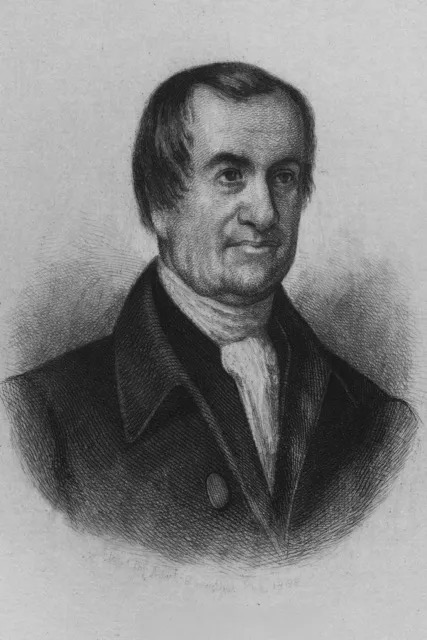
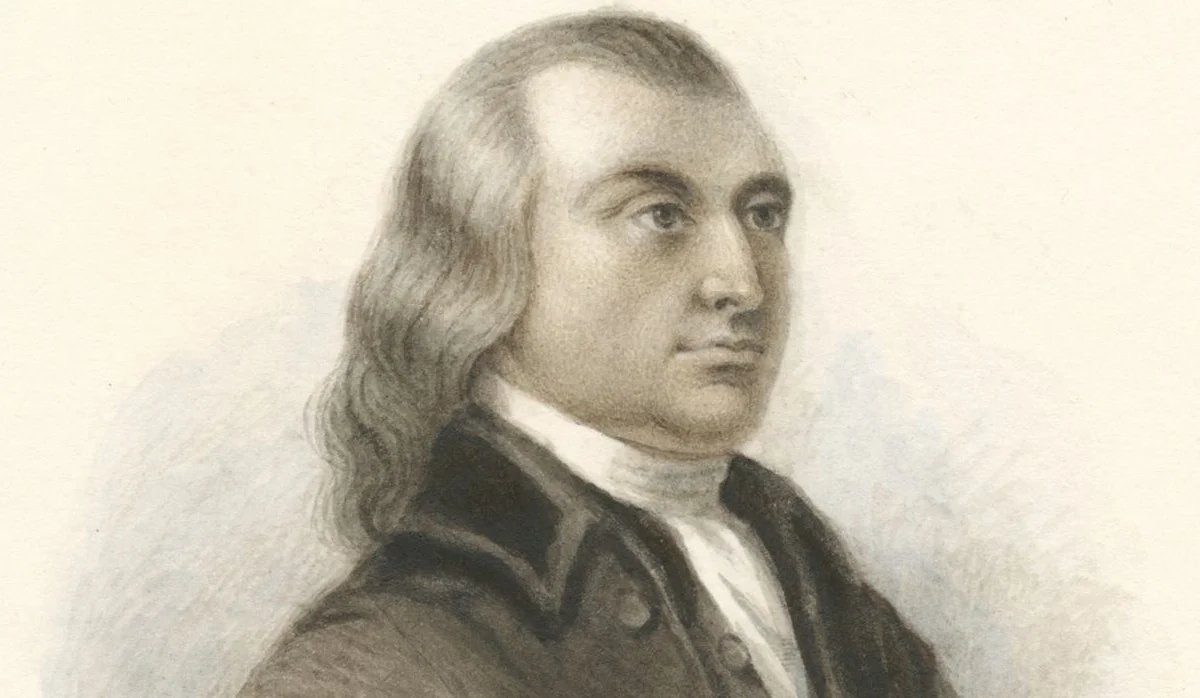
For this lesser-known signer, I am reproducing two separate takes on his life. The first one is from the White House site where I have been getting my information on the other signers. The second one is from an X post that crossed my feed earlier today. Same guy, two different looks at his life and contribution. And two different pictures of him, too.
Abraham Clark was born on February 15, 1726, in present-day Elizabeth, New Jersey. With little formal education and chronic illnesses that made farm work difficult, he pursued independent study and developed strong skills in mathematics. He became known as a “poor man’s counselor,” offering legal advice—often for free—despite likely never being formally admitted to the bar.
Clark married Sarah Hatfield, and they had ten children. He began his public career as high sheriff of Essex County before joining the New Jersey colonial legislature in 1775.
When New Jersey’s original delegates opposed independence at the Continental Congress, the state convention replaced them with six new delegates, including Clark. He signed the Declaration of Independence in 1776 and remained a steady presence in the Continental Congress, often serving simultaneously in the state legislature. During the war, two of his sons were captured and imprisoned by the British aboard the Jersey prison ship.
After the war, Clark was one of twelve delegates to attend the Annapolis Convention of 1786, addressing the weaknesses of the Articles of Confederation. Though illness prevented him from attending the Constitutional Convention, he lobbied for the inclusion of a Bill of Rights.
In later years, Clark was elected to the Second and Third U.S. Congresses. He died of heat stroke on September 15, 1794, having dedicated his life to the birth of this new nation.
Of the 56 men who signed the Declaration of Independence, Abraham Clark may have paid the highest personal price. Almost nobody knows his story. Buckle up.
He was a New Jersey farm kid considered too frail for farm work, so he taught himself math, then surveying, then law. He never got rich from it because he kept defending poor farmers who could not pay him. His neighbors called him “the Poor Man’s Counselor.”
In the early hours of July 4, 1776, while Congress debated independence in Philadelphia, Clark wrote a letter to a friend with one of the most chilling lines of the Revolution: “Perhaps our Congress will be exalted on a high gallows.”
He signed anyway.
Then the British made it personal. Two of his sons were officers in the Continental Army, and both were captured. They were thrown onto the prison ship Jersey in New York Harbor, the deadliest place of the entire war. More Americans died on British prison ships than in every battle of the Revolution combined.
One son got it even worse. He was locked in the dungeon and given no food except what other starving prisoners could push through the keyhole of his cell.
The British reportedly offered Clark a deal: renounce the Declaration, switch sides, and your boys go free.
He refused.
Here is the part that breaks me. Clark sat in Congress through all of it and never once brought it up. No special pleading, no favors. Congress only found out through other channels and threatened retaliation against a British officer, which finally got his son out of the dungeon.
After the war, he kept choosing the little guy. He fought for debt relief for struggling farmers and refused to support the Constitution until he was assured a Bill of Rights would protect ordinary citizens.
In September 1794, at age 68, the self-taught surveyor who outlasted the British Empire died of sunstroke after a long day working on his own farm.
No statue on the National Mall. No musical. Just a small town in New Jersey called Clark, and most people who drive through it have no idea why.
Some men signed the Declaration with ink. Abraham Clark signed it with his sons.
Of the 56 men who signed the Declaration of Independence, Abraham Clark may have paid the highest personal price. Almost nobody knows his story. Buckle up.
He was a New Jersey farm kid considered too frail for farm work, so he taught himself math, then surveying, then law. He… pic.twitter.com/z8dTJHwQSV
So, you have seen both versions about Abraham Clark’s life and contributions. Which one do you like the best? I think they’re both excellent, and emphasize different aspects of his life.