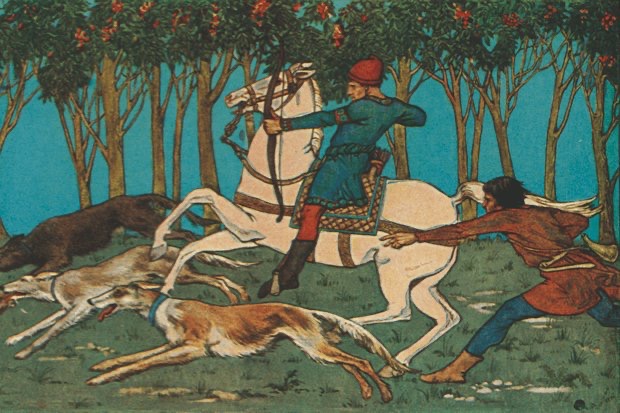
This young man’s hobby horse is human health, and how our conditions have changed with history. I’ll bet you haven’t looked at things quite this way before.
Nasty, brutish and short. That is the phrase everyone reaches for to describe life before civilisation, and it may be one of the most successful pieces of propaganda ever written, because it is very nearly backwards.
The line is Thomas Hobbes, 1651, on life without a strong state. It got promoted into a verdict on the Stone Age hunter: that our ancestors wallowed in filth and starvation until farming and government rode in to save them.
Flattering. Also flatly contradicted by the one witness that cannot lie, which is the skeletons.
Lay a pre-agricultural hunter in the ground beside the farmer who replaced him on the same soil, and the bones are embarrassing.
In the eastern Mediterranean the hunters stood around five foot nine. After the turn to farming, average height dropped close to five inches, and in places the descendants have still not won it back.
At Dickson Mounds in Illinois, where you can read the change burial by burial, the farmers carried fifty per cent more rotten teeth, four times the anaemia, spines worn down by labour, and lives that got shorter rather than longer.
Tall, sound-toothed hunter on top. Stunted, aching farmer beneath. The same patch of earth.
So where did the famine and the plague and the misery come from? They arrived with the granary.
Chain a whole people to two or three crops and a bad summer turns from a lean month into starvation, the kind that emptied medieval villages while no hunter with the whole wild to draw on ever knew it.
Herd people and their animals into permanent settlements and you brew the crowd diseases, measles and smallpox and tuberculosis, that need a crowd to spread.
Heap up a grain surplus and a few men can suddenly own it, guard it and rule everyone who needs it, and there is your landlord, your tax collector, your standing army.
The inequality is in the graves too. At Mycenae the royals lie inches taller with a full set of teeth while the commoners rotted beside them, a gap in the bone that did not exist before there was grain to hoard.
A fair word, because the romance oversells it. The hunting life was no meadow of gentle equals. Men fought, raids came, a hard winter could still finish you.
The point is narrower and harder than the fantasy: the organised, industrial scale of human misery, the famines and plagues and slavery and despots, is overwhelmingly the work of what came after the first field was ploughed.
Which leaves the famous phrase stranded. Coined for life without the state, borrowed to sneer at the hunter, it fits neither half so well as it fits the hungry, stooped, plague-worn peasant who came after the plough.
Hobbes was describing a cage, and mistaking it for the wild.
I can’t recall ever having read this kind of history before. It stands to reason that early humans wouldn’t have stayed put before they discovered that they could grow plants. Hunter/gatherer societies pretty much had to follow the migration paths of the animals they ate. Just that alone would have kept them physically fit! I wish more biology and anthropology teachers would mention these facts about early human populations. It’s also thought-provoking to think that the development of agriculture might not be the 100% beneficial advance that’s it’s always considered to be.
And now, here’s some anatomy to go with the above.
Your large intestine is a polite, tidy, undersized thing, and that fact alone rules you out as a plant specialist.
The animals that make a living from plants are defined by what they keep at the back end. A horse has an enormous hindgut. A gorilla’s colon and fermenting chamber fill most of its torso. A cow runs four stomachs and a microbial factory the size of a dustbin. All of it exists to do one slow, demanding job. Turn cellulose, the tough fibre of plants, into something the animal can absorb. It takes vast internal volume and many patient hours.
Now look at yours. The human colon is small and unassuming, a fraction of the proportional size of a true herbivore’s. We have nowhere to run that great fermentation. Eat a large amount of plant fibre and your gut cannot wring a living from it the way a cow can. It mostly bulks up, ferments a little, makes gas, and moves on.
That missing fermentation chamber is the most damning piece of anatomy in the whole argument. You cannot be an animal built to live on plants while lacking the one organ that living on plants absolutely requires.
What you have instead is a short, efficient tube for absorbing rich, concentrated, already-broken-down food. Meat. Fat. The output of a kill, not the contents of a meadow.
This post confirms what I have always known to be true, that veganism is against Nature. People were NOT meant to be vegan, or even vegetarian, and the busybodies who insist that we all eliminate meat from our diet are interested, primarily, in controlling us, not making us better. Weak people are much easier to control, since they would be tired all the time. Vegans tend to look like this:

Rather than this:
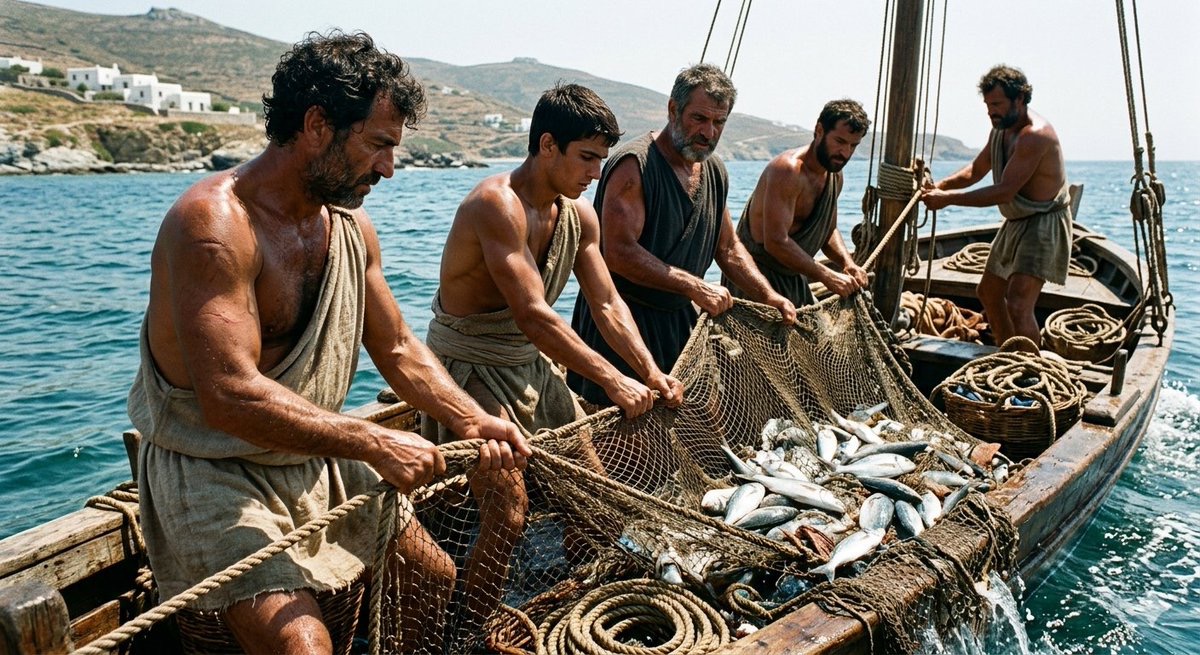
Here’s a very sad tale that’s a “vegan nightmare” that perhaps you weren’t aware of.
In 2003 a man who could afford literally any medical care on the planet was told he had one of the very few pancreatic cancers you would actually want to be told you have.
Steve Jobs had a neuroendocrine tumour, the rare, slow-growing kind of pancreatic cancer that surgeons can often cut out and cure if they catch it early, a world away from the common and savage form that kills most people inside a year. It had been found by accident, on a scan for something unrelated. By the merciless standards of that diagnosis, he had been handed a winning ticket.
He decided not to cash it.
For nine months, Jobs turned down the operation. A lifelong vegan and sometime fruitarian who had named his company after a piece of fruit and treated diet as something close to a religion, he reached instead for the tools of that worldview. A strict plant regime. Juice fasts. Acupuncture. Herbal remedies. Bowel cleanses. A healer who promised the body would right itself without a blade. He even, by his biographer’s account, consulted a psychic. The most ruthlessly rational designer of his age, handed a tumour, set about trying to think it away.
His wife pleaded with him. His friends pleaded with him. His doctors pleaded with him. He had what his biographer called a reality distortion field, the famous knack of bending people around him into believing the impossible, and for nine months he turned it on the inside of his own pancreas.
He had the surgery in 2004, by which point the picture had changed. He fought on for years with every weapon money could buy, a liver transplant, early genetic sequencing of his own tumour, dying in 2011 at fifty-six. Late on he admitted the delay had been a mistake, and said, with what his biographer called a hint of regret, that he simply had not wanted his body opened up.
Honesty demands a caveat, because the man is not here to put his own case. Not every oncologist agrees those nine months were decisive. These tumours can smoulder slowly, and some experts think the ending might have been the same regardless. We cannot run the other version of his life and check.
But the shape of the lesson is hard to miss, and it has far less to do with veganism than with what happens when any way of eating hardens into a faith. A diet stops being something you do and becomes something you are, and from then on it cannot be allowed to fail, because its failing would mean you had been wrong about yourself. Jobs did not lack intelligence or resources. He had more of both than almost anyone alive. What he also had was a conviction so total that when his own body put its hand up and asked for a surgeon, he told it to wait.
It waited.
Now, here’s another very interesting piece of nutrition history that I’ll bet you have never heard of. I hadn’t until now.
n 1919 a New York physician got so fed up with watching his patients get worse that he went to a museum to ask the dead for advice.
His name was Blake Donaldson. He had a practice full of people who were overweight, ill, and getting steadily worse no matter what the medicine of the day threw at them, and he had run clean out of ideas. So he walked into the American Museum of Natural History, found the anthropologists, and asked them the question no respectable doctor was supposed to ask. What did healthy humans actually eat before all of this?
They showed him the skulls. Ancient ones. Pre-agricultural ones. And the teeth stopped him in his tracks. No decay. No crowding. No abscesses. Rows of clean, strong, untroubled teeth belonging to people who had never met a dentist, a toothbrush, or a sack of flour. The anthropologists told him about the Plains hunters who lived on buffalo, and about pemmican, the dense brick of dried meat and rendered fat that carried men through a North American winter on next to nothing else.
Donaldson went back to his surgery and did something that would get a modern doctor hauled in front of a committee. He put his patients on meat.
Fat meat, specifically. Roughly six ounces of lean with two ounces of visible fat, three times a day, from beef or lamb. Coffee. Water. That was the prescription. He stripped out what he called the worst offenders, the flour and the sugar and the sweet milk, and he watched what happened.
What happened was they got better. The weight came off without hunger, because he insisted they eat enough and eat often. The blood pressure settled. The gallstones, the migraines, the aching joints, the sour stomachs, the whole catalogue of modern complaints he had been failing to shift for years began, quietly, to resolve. He kept going. By the end he had run something like seventeen thousand patients through this regime over roughly forty years, which is a working lifetime of evidence rather than a passing fad.
He wrote it down in a book called Strong Medicine in 1961.
The establishment’s response was swift and familiar. One prominent figure pronounced the book hardly scientific. Another filed Donaldson under food faddism and implied he had simply forgotten whatever he once knew about nutrition. A man with forty years of patient outcomes was waved off by people armed with a theory and a grievance, and the profession moved smoothly on to the low-fat advice that has served us so brilliantly ever since.
He was not a guru and never pretended to be one. He thought he was just copying what those museum skulls had been quietly demonstrating for ten thousand years, which is about the most honest thing a doctor has ever said about diet.
The book is still in print. The skulls are still in the case. And the advice that buried him is still printed on the side of the cereal box.
It is well-known that animal meat is the most energy- and nutritent-dense food that humans can consume. The globalists who are doing their level best to discourage people from eating meat (and have already made and distributed insects whose bite makes people violently allergic to red meat!), except for themselves! They want the common people weak and tired, but THEY reserve for themselves the best nutrition, all the better to dominate and control us. This is not a new thing, and Mr. Hoole tells us about that, too.
After 1066, the Normans fenced off nearly a third of southern England so a handful of men could hunt deer. Taking one to feed your family could cost you your eyes.
The Royal Forests were not woods in any normal sense. They were vast legal preserves where the king’s deer and boar, the venison, were protected for royal sport, and ordinary life was criminalised.
Under William Rufus the penalties were spelled out with relish:
- Kill one of the king’s deer, and you were put to death.
- Shoot at a deer and miss, and your hands came off.
- Merely disturb the deer, and you could be blinded.
You could not carry a bow, fence your crops against the deer that ate them, or even keep a dog with its claws intact, in case it gave chase.
A starving man, watching the king’s venison graze across land his grandfather had farmed freely, was expected to look at his children and do nothing. The meat was the king’s. The hunger was his own.
The aristocracy arrogated the meat to themselves, and left the grains to the peasants. Doesn’t that sound familiar in today’s world? The WEF Aristocracy insists you give up your car for public transportation, while they travel in their yachts and private jets. They insist you stop eating meat, while they go to their fancy restaurants and eat Wagyu steak.
One more story of aristocratic manipulation of the public. There are many and varied tales of “scientists” and “researchers” discovering that a certain food or ingredient was harmful, leading to the government warning the public NOT to eat it and altering the “food pyramid” to incorporate the new orthodoxy. Only to be found later NOT to be the issue, but those findings are quietly suppressed or published but never announced.
Ancel Keys
>has data from 22 countries
>cherry-picks 7 that fit his hypothesis
>ignores France, Switzerland, West Germany, all of whom eat butter and have low heart disease
>publishes the result as “the Seven Countries Study”
>becomes the most cited nutrition researcher of the 20th century
>destroys the careers of any scientist who points out the missing fifteen countries
>creates the dietary guidelines that 350 million Americans and 60 million Britons will follow for the next seventy years
>watches obesity, diabetes, and heart disease climb every year of his career
>later quietly admits dietary cholesterol doesn’t really affect blood cholesterol
>quietly retires to the Mediterranean
>lives to 100 eating butter, cheese, eggs, and red meat
>never apologises >never recants
>never gives the careers back
>”the science is settled, don’t question it”
I hope this is a learning experience for everyone. It has been for me.

