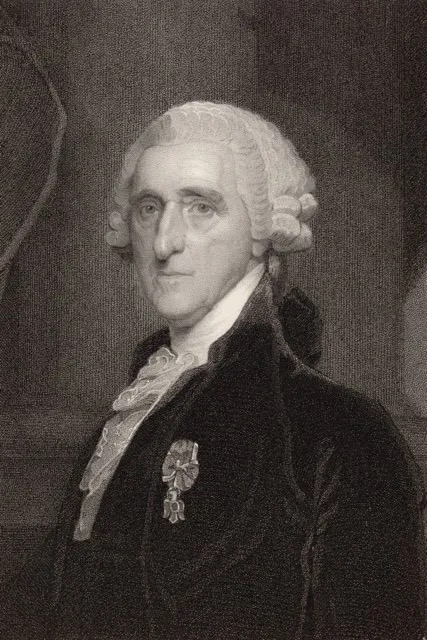
Thomas McKean served two states, and there are at least two ways to speak about his colorful life.
Thomas McKean was a lifelong public servant, statesman, and jurist who helped shape early American government.
He was born on March 19, 1734, in Chester County, Pennsylvania, the son of an innkeeper and farmer. Though a Pennsylvanian by birth, McKean studied and practiced law in Delaware, where he held a number of public offices, including deputy attorney general, justice of the peace, and speaker of the colonial assembly.
In 1765, McKean represented Delaware at the Stamp Act Congress, opposing British economic policies. He later helped dissolve British control in Delaware and was elected to the Continental Congress, where he, along with Caesar Rodney, ensured Delaware supported independence.
McKean uniquely held office in both Delaware and Pennsylvania simultaneously and contributed to both states’ constitutions. In 1777, he became Chief Justice of the Pennsylvania Supreme Court, serving for 22 years.
He also served as a colonel during the Revolutionary War, became President of the Continental Congress, and signed the Articles of Confederation. After the war, McKean helped secure Pennsylvania’s ratification of the U.S. Constitution. As a judge, he supported the principle of judicial review well before it was nationally established.
McKean later served three terms as governor of Pennsylvania, surviving political opposition and an attempted impeachment. At age 80, he helped organize a citizens group to defend Philadelphia during the War of 1812.
Thomas McKean died of natural causes in 1817.
Interesting guy, right?
Thomas McKean was a lifelong public servant, statesman, and jurist who helped shape early American government.
He was born on March 19, 1734, in Chester County, Pennsylvania, the son of an innkeeper and farmer. Though a Pennsylvanian by birth, McKean studied and practiced law in Delaware, where he held a number of public offices, including deputy attorney general, justice of the peace, and speaker of the colonial assembly.
In 1765, McKean represented Delaware at the Stamp Act Congress, opposing British economic policies. He later helped dissolve British control in Delaware and was elected to the Continental Congress, where he, along with Caesar Rodney, ensured Delaware supported independence.
McKean uniquely held office in both Delaware and Pennsylvania simultaneously and contributed to both states’ constitutions. In 1777, he became Chief Justice of the Pennsylvania Supreme Court, serving for 22 years.
He also served as a colonel during the Revolutionary War, became President of the Continental Congress, and signed the Articles of Confederation. After the war, McKean helped secure Pennsylvania’s ratification of the U.S. Constitution. As a judge, he supported the principle of judicial review well before it was nationally established.
McKean later served three terms as governor of Pennsylvania, surviving political opposition and an attempted impeachment. At age 80, he helped organize a citizens group to defend Philadelphia during the War of 1812.
Thomas McKean died of natural causes in 1817.
"I am hunted like a fox by the enemy." A signer of the Declaration of Independence actually wrote those words. He moved his family five times in three months to keep them alive. Meet Thomas McKean.
McKean is one of the most important Founders you were never taught about, partly… pic.twitter.com/uv1NWsKmLD
Oh, yes! I actually found another mention of this Founder, from a descendant. It must be so cool to be from a family that has been in America since its founding.
My 6th great grandfather, Thomas McKean, was a signer of The Dec of Ind. He was the one who sent a rider to Delaware on July 2 bc the vote for The Dec of Ind was tied. Caesar Rodney got to Philadelphia in time to break the tie & the Dec of Ind was approved on July 4!🇺🇸 pic.twitter.com/009u4lcQeG
So, another one of the absolutely remarkable men who founded this country. Every American should know about them, and be grateful every single day that they were born in the Greatest Country on God’s Green Earth.