Just today, there was a story in the news about the new statistics for the US economy, and it was good news. The US economy grew 3.4% in the third quarter, which is huge! In the Biden economy, it was lucky if there were any GDP growth at all, and now Trump’s economy has come roaring back. Just this week, Audi announced that it would be building a new assembly plant in America (Georgia), which spells lower prices for car buyers, and better supply. And instead of raising interest rates again, the Federal Reserve left rates the same, which is also good news. So the national economy is doing fine.
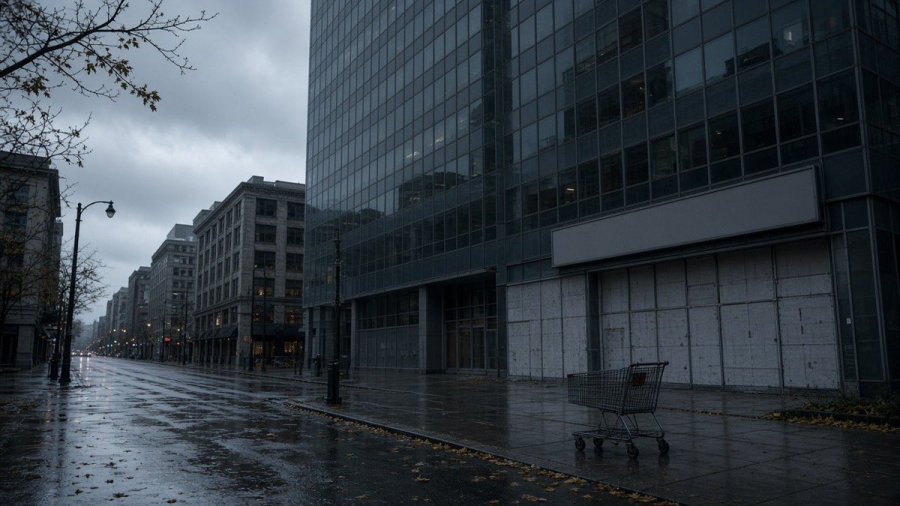
It is unfortunate that the local, Pacific Northwest economy is NOT doing fine. Every day, there are new stories of businesses closing down, leaving the area, announcing huge layoffs, and selling office buildings at huge discounts. Let’s take a look at the local news.
First, Comcast has announced that it will be laying off 159 employees in Washington in what it describes as “restructuring.”
And the Seattle Public Schools announced that it could be merging 21 schools, due to a drop in enrollment.
Seattle’s Downtown Is on Clearance.
City Hall’s Answer: “We’re #4 in the World.”
A 41-story Seattle tower just sold at an 84% discount, and nearly half the businesses that answered a new survey say they’ve thought about leaving too.
In 2019, Vanbarton Group paid $304.5 million for 901 Fifth Avenue, the 41-story tower once known as the Bank of California Building. This fall it sold for $48.3 million, about $89 a square foot and roughly 84% below the 2019 price.
That’s not a one-off. In June, Roosevelt Commons in the U District went for $27 million. It sold for $157 million in 2019. That’s an 83% haircut, and nobody even had to call it a “market correction” with a straight face.
Now the people still paying rent are talking. The Seattle Metro Chamber and the Downtown Seattle Association surveyed 247 businesses in late summer. Of the 197 who answered the question, 47% said they had seriously considered moving operations, jobs or investment out of Seattle in the past year. Fifty-six percent said the business climate got worse, 61% are pessimistic about the next 12 months, and 72% said Seattle’s tax, fee and compliance burden isn’t competitive. They rated the city’s responsiveness to business 26 out of 100. Public safety and taxes topped the list of reasons.
The mayor’s office, asked about it, reached for a ribbon: “Seattle was recently ranked #4 in the world on the Oxford Economics 2026 Global Cities Index – this is something to be proud of.” Nothing says “we heard you” like a participation trophy.
To be fair (somebody has to be), this is a voluntary survey, not a random sample, and only 9% said they actually expect to relocate in the next year. Office values are down in a lot of cities since remote work became normal. But Portland’s Royal Sonesta hotel reportedly sold for about 94% off its 2016 price, too, and the common thread in these places isn’t the weather.
Here’s the Washington twist. On Tuesday’s ballot, IP26-645 would repeal the state’s new 9.9% tax on individual income over $1 million, set to start in 2028. The state estimates repeal would cost about $11.4 billion over five fiscal years, and supporters of the tax say that money funds schools and health care. Opponents say the people who pay it are the same ones already eyeing the exits.
Downtown Seattle is the experiment. The price tags are the results.Seattle and Washington folks: is the city’s slide about remote work, or about how City Hall and Olympia treat the people who sign the paychecks?
Seattle just received an important reminder: the Constitution can limit how much government can impose on property owners. In GRE Downtowner LLC v. City of Seattle, the Washington Court of Appeals revived an inverse-condemnation lawsuit challenging the cumulative impact of Seattle’s rental-housing and eviction ordinances.
The owner of the Addison, a 254-unit low-income housing complex, alleges that rent collections fell from roughly 93% in 2015–2018 to below 45% in 2023, resulting in more than $2.7 million in operational losses that year. The owner argues that the combined burden of these regulations amounts to a regulatory taking, and the court concluded that sufficient facts had been alleged for the claims to move forward.
Policymakers take note: Regulations don’t exist in a vacuum. They accumulate. And at some point, policies intended to protect affordable housing can make providing that very housing increasingly difficult if not impossible. We need housing policy that protects tenants and preserves the ability and incentive to actually provide housing.
On the Livability front, for the average citizen, things are not going very well, with all costs of living rising quickly, and an Income Tax on the horizon if we don’t vote for I-645 to repeal it. It seems that those in government prefer to subsidize the decay of cities and counties, to reward their NGO donors.
Kirkland, WA 98033. A 1040 SQ FT house/7,200 SQ Ft lot.
Developers buy these properties, tear them down, and build mansions. A house directly across the street now valued at $3.4Million.
I used to get calls, every day.
Now, nothing. No offers.
The rich people are leaving
Washington State
HIGHEST MINIMUM WAGE + CLIMATE COMMITMENT ACT
Food – A Luxury Item in the Evergreen State
Harger: No state spends more per person on groceries than Washington State
It’s more than $11,000 a year
NOTE: Don’t be so greedy. Just stop eating and pay your taxes to feed state government employee fat cats.
Oct. 29, 2026
Picture this.
You’re a mom or a dad with a young family. You’re working hard. Money is tight every month, and one of you has picked up a second job just to keep the rent paid and a roof over the kids’ heads.
You have a plan, sort of. Get a little breathing room on rent. Start setting money aside for a down payment. Stop crossing your fingers every time the car makes a new noise. That idea of moving on up gnaws at you.
Then you get to the checkout at the grocery store. Going out to eat stopped being an option a while ago. The receipt keeps getting longer and the total keeps going up. Your paycheck doesn’t.
New numbers show that squeeze is piling up here in Washington State faster than almost anywhere in America.
The average Washington household spent an estimated $11,347 on groceries last year.
The average American household spent $8,019.
That gap, more than $3,300 a year, comes from a new ConsumerAffairs grocery study that ranks Washington State third in the country for how much of a family’s paycheck disappears at the checkout.
No state spends more per person on groceries than we do: $4,612 a year, 44% above the national figure. And the household bill grew $430 from 2024 to 2025, the biggest jump of any state in America.
Food is the one bill nobody can skip. You can put off a new car, cancel a streaming service, and stretch the tires another winter. You can’t stop feeding your kids. When groceries climb this fast in a state that’s already this expensive, along with the power bill and the rent, the family doing everything right is the one that falls behind.
And spare me the advice to skip the latte. Washington families already cut back. We tie Alaska for the smallest share of food spending that goes to eating out.
Washington’s $99,389 median income hides the families falling behind
Washington is a high-income state, and the study accounts for that. The median household here earns $99,389. Against that, groceries take about 11.4% of income, up from about 11.2% before the pandemic. That sounds survivable.
Median means half of Washington households earn less than that.
Washington’s minimum wage is $17.13 an hour, the highest statewide rate in the country. Work full time all year and you gross about $35,600 before taxes. The average Washington grocery bill would eat nearly a third of it. That’s before rent, before gas, and before the power bill.
The price tags keep moving, too. Seattle-area grocery prices rose 4.5% over a year, according to the latest numbers from the Bureau of Labor Statistics. Nationally, it was 1.8%.
Why Washington groceries cost more than Oklahoma’s
In Oklahoma, groceries take 6.8% of household income, the lowest share in America.
So why are we paying so much more? Land is expensive here, and a grocery store pays for its lot and its building one cart at a time. Labor is expensive here, too. And the big names on our grocery stores trace back to just a few corporate owners. Kroger owns Fred Meyer and QFC. Albertsons owns Safeway and Haggen. The two tried to merge in 2024 before the courts blocked it.
Olympia should put a household price tag on every bill
Nobody’s going to wave a wand and roll grocery prices back to 2019. Some commodities will dip. Most prices will stay put.
Highest cost of Food ever. Families have to eat, and there’s only so much “scrimping” you can do on food, especially if you have children. Many have totally given up eating out, which is also becoming very expensive, and has less variety even available as restaurants close down due to their high costs.
Did I mention the crisis in Livability?
HAPPENING NOW: What an absolute disgrace and public safety crisis unfolding outside Seattle’s Dr. Jose Rizal Park. I watched more than 20 Beacon Hill International Elementary School kids dodge fentanyl foil and homeless drug addicts as they walked home Monday afternoon.
One parent says Seattle Public Schools refuses to provide school buses since they are dealing with a budget crisis. Meanwhile, less than a week after socialist Mayor Katie Wilson announced her new plan to address homelessness, her streets are covered with service resistant drug addicts because they are all refusing shelter and services.
About those NGO’s, especially the ones designed to manage homelessness (I say manage, because the homeless have been increasing steadily as more arrive and fewer leave the streets)…
We Heart Seattle just exposed fentanyl smoking shacks inside taxpayer funded Low Income Housing Institute’s tiny house villages. But I was chasing this tip as well. Recently, I point blank asked LIHI Executive Director Sharon Lee about these controversial “safe consumption” sites on her properties. Instead of giving me a yes or no answer, listen to what she had to say.
LIHI is the most egregious offenders of NGOs designed to offer “services” to street vagrants. They take huge government grants from cities and counties, pay their executives high salaries, and donate portions of those salaries right back to the elected officials who are their gravy-train. All while NOT reducing the number of homeless and actually encouraging their drug addictions with their “harm-reduction” policy. It’s a very tidy little money-recycling operation. And for all that tax money, the citizens receive unsafe streets, high crime, filth, and the destruction of public facilities like parks.
It’s the Economy, Stupid, and the only ones benefiting from the economy are politicians and their cronies, while the taxpayers suffer.

