This is a different take on the Boston Tea Party.
252 years ago today, the British Empire closed the busiest port in North America to teach one colony a lesson, and accidentally turned thirteen colonies into one country.
On December 16, 1773, a few dozen Bostonians had thrown 342 chests of East India Company tea into the harbor. The damages came to roughly £9,659. Lord North, the Prime Minister, decided to make an example. Parliament passed the Boston Port Act. King George III signed it on March 31, 1774. It took effect at dawn on June 1.
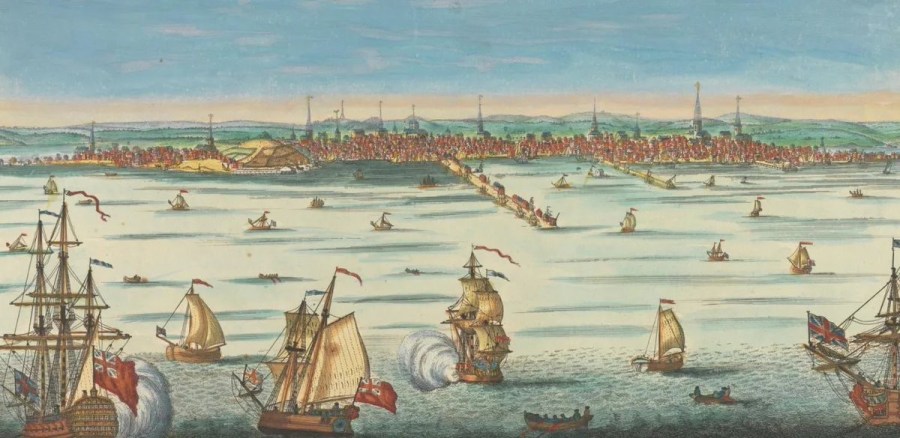
The Royal Navy moved warships into Boston Harbor and dropped anchor. Every dock was sealed. No ship could enter or leave. Not a barrel of flour, not a load of firewood, not a letter. The port would stay closed until Boston paid the East India Company in full and promised to behave.
The intent was to isolate Massachusetts and force her neighbors to watch her starve.
What happened instead is one of the strangest political miracles in modern history.
Down in Williamsburg, a 31 year old burgess named Thomas Jefferson and a few friends, including Patrick Henry and Richard Henry Lee, pulled a dusty old book off the shelf of the House of Burgesses library, a record of how the Long Parliament had once handled a tyrant, and proposed that the entire colony of Virginia observe June 1, 1774 as a day of “fasting, humiliation, and prayer” in solidarity with Boston.
The Royal Governor, Lord Dunmore, dissolved the House two days later for treason. The burgesses simply walked across the street to the Raleigh Tavern and kept meeting.
June 1 came. In Virginia, every Anglican church was draped in black. The bells tolled all day. Plantation owners shut their doors. Jefferson wrote later that “the effect of the day through the whole colony was like a shock of electricity.”
The same shock ran through every colony south of New England. Wagon trains of food started rolling toward Boston from as far away as Charleston. The Marblehead fishermen offered to give the Boston merchants the use of their docks for free. A Quaker miller in Pennsylvania sent a hundred barrels of flour. Israel Putnam personally drove a herd of sheep from Connecticut to feed the city.
Three months later, 56 delegates from twelve colonies sat down together in Philadelphia. It was called the First Continental Congress. None of them had ever met under one roof before.
Parliament wanted to punish a city. It created a nation.
252 years ago today, in a harbor full of Royal Navy frigates, the American Revolution stopped being a Massachusetts problem.
The rest of the colonies came to the aid of Massachusetts. Would the States do that today in similar circumstances?

