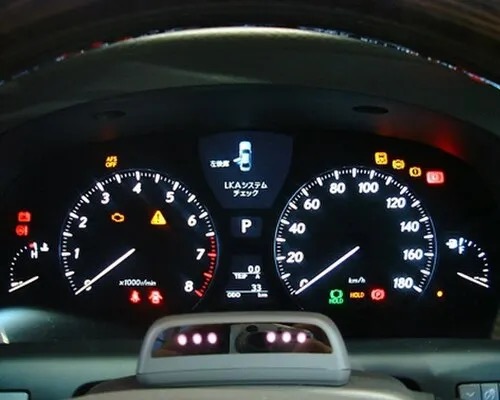
If you have been paying attention to the news regarding new vehicles, you might have seen reports describing a Biden Administration law that has gone into effect. The reason given for passing this new law, a requirement for ALL new cars, was “saving lives by keeping drunk drivers off the roads.” Now, we all know that when the Left says they want to save lives, they usually come up with a plethora of onerous new rules and regulations that don’t save any lives, but do put burdens on law-abiding citizens.
The rule, passed as part of the Biden infrastructure bill, requires ALL auto manufacturers, by 2026, to install technology that would stop a car from being driven/started if it detects that the driver is “impaired.” Now, just try to adequately define, and measured “impairment,” and you will get an idea of how tricky this concept is. What kind of driver behavior might indicate impairment? Wobbly walking? Not possible for car to measure from inside the car. Alcohol/drugs on driver’s breath? Car breathalyzers already exist, but are an add-on that does not come in all cars. For someone with no arrests for DUI, that device would assume guilt, instead of innocence like our laws state (driver would have to prove unimpaired to drive). Internal camera to track driver eye movements? Exceedingly invasive, and likely to capture safety behavior like watching mirrors or oncoming traffic, not impairment. So you see the problem. Impairment-detection technology is still in development.
However, most auto makers are now including in their vehicles technology that is classified as Driver Surveillance, with the intent of stopping impaired or shifty driving. Here is one description.
ALL VEHICLES MADE IN 2027 WILL BE REQUIRED TO HAVE A KILL SWITCH
All vehicles manufactured in 2027 will officially be required to come equipped with advanced impaired driving prevention technology.
Under this new law, automakers must install systems that use cameras and AI to monitor driver behavior, tracking things like eye movement and attention levels.
If impairment is detected, the system will activate a kill switch and prevent the vehicle from operating.A kill switch in your car, controlled by AI and cameras watching your every move. When was that ever a good idea?
And no, it definitely will not be used for anything else. They would never remotely disable your car for any other reason.
Not during a protest. Not during a lockdown. Not ever.Absolutely nothing can go wrong.
They’re selling this as “safety”… but it’s straight-up government surveillance in your car. New cars (and especially all 2027 models) now come with infrared cameras that constantly watch your eyes.
If the system can’t “see” your eyes — sunglasses, looking at GPS for a second, bad lighting, whatever — it beeps, nags you, and can literally cut power to the gas pedal or slow the car down until you look “properly.” They call it “impaired driving prevention.” We call it Big Brother in the driver’s seat. Biden’s 2021 Infrastructure Bill quietly mandated this.
No opt-out. False positives already happening. Your car deciding when you’re allowed to drive. This isn’t about drunk drivers. This is about control. They want to track your every move, collect your data, and slowly turn vehicles into rolling nanny-state devices.
Hard pass. Freedom includes the right to drive without a camera judging your eyeballs.
Now, let’s see what actual drivers today have to say about the new cars they bought or rented. This is happening RIGHT NOW.
Rental car is new, expensive, and utterly undriveable.
Main problem is the aggressive notification to take a break with a coffee emoji and five loud beeps. It is triggered if you drive too close to the line or veer even slightly outside the perfect center, like threading a needle constantly.
So it screams at you for even the slightest venial sin — providing more moral exhortations than a puritan preacher in 17th century Plymouth. This happened every ten minutes or so on a 2.5 hour drive. Makes one insane. If I drank all the coffee they had suggested, I would have been hospitalized.
Meanwhile anything you want to do — turn on the radio, change the temp, change the station whatever — comes with a text warning not to be distracted and a terms of use approval, as if this is not distracting in itself. I’m certain the rental is somehow linked to the Internet so you get the sense that you are not driving at all. Paradoxically, it all feels extremely unsafe and it is impossible to relax. Horrid!
The one time someone snuck into my blindspot going 80 — now way to see this because this SUV has the outward visibility of a tank — the magic seeing eyes did not notice. It is more interesting in correcting that helping me. What a miserable experience.
It’s odd because the US went all in with cars after WW2 at the expense of passenger trains on grounds that cars offer individual freedom. These new cars do NOT offer individual freedom. They are hectoring, surveilling, prisons on wheels. By constantly registering distrust in you as the driver, they deprecate volition and hence make driving less safe than ever.
And it’s not just Jeffrey Tucker having these experiences. Here are some of the comments under his X post.
Yup, I had the same experience recently in a rental. Hyundai Iconiq 5. It wouldn’t shut up about coffee breaks. Even after a 20 minute fuel stop on a 350 mile journey. I mean, I rented you, I didn’t marry you!
We recently rented a car and had a similar experience. Ours was a hybrid Hyundai. I lost track of how many times the cruise control disengaged during highway driving with a speed limit of 80mph. All because the hand positions my husband is accustomed to on the steering wheel blocked the spy eye on the steering column.
I will never buy one.
A nations of scolds now has a vehicle. Constantly reminded to put both hands on steering wheel (they are) check back seat, don’t be distracted while driving, etc alerts that are actually distracting
Rented a Palisade last fall and was not informed about the self-driving features. Going 80 down the highway “fighting ” with the vehicle. Hubby didn’t believe me until I made him drive
. We both hate the “help” and found it dangerous.
I drove my father in law’s new car recently bringing him back from an appointment, and it had the lane keeping feature turned on. In one instance, I went to change lanes, but there was another car in my blind spot. Before I left my lane, I corrected, but at the exact same moment the car did too, which abruptly put me all the way into the lane to the right of me. It’s a good thing nobody was there. These things are supposed to make us safer? Sure doesn’t seem that way.
Was considering trading in the 2016 Forester for a 2018 Outback…got to drive a loaner, returned it next day to pick up my car. Sales guy asked if I was ready to do a deal. I said hell no. Any car that has someone elses hand on the wheel (the Eyesight system) is inherently unsafe at any speed. 4 million safe driving miles under my belt…no ones hands on the wheel besides mine. Seeing all these “safety systems” on cars lately, I doubt I’ll ever buy new again. Barret Jackson, here I come.
So, it looks like I will be letting my husband know that when his 2005 car with 325,000 miles on it finally gives up the ghost, he should look for a used car and not a brand new model.
Now, here is a very good article describing all the problems with the new “driver monitoring” technology appearing in the latest model cars.
Avoidance, Evasion and/or Removal of Mass Surveillance State Tech in Personally Owned Vehicles.
Initiated; 6/18/26
This is a baseline document that will continue to be added to for the express purpose of providing information to the American Public on means and methods available for evading, avoiding, and/or removing surveillance tech in their personally owned vehicles.
We The People, regardless of Courts or Legislatures, assume and declare that forcing these devices into our vehicles and our use is tyrannical and un-Constitutional, therefore repugnant to the Constitution, void, ab initio, detrimental to our Liberty and Rights, and that therefore We may act as necessary to avoid, evade, and remove these mass surveillance systems being forced upon us.
VIOLATIONS OF CONSTITUTIONAL PROTECTIONS.
**Primarily the Fourth Amendment, with potential arguments under the Fifth, Ninth, and Tenth Amendments.
** No court has definitively ruled on the constitutionality of the NHTSA-mandated driver monitoring systems (DMS) or “impaired driving prevention technology” from the 2021 Infrastructure Investment and Jobs Act (Section 24220). These are ongoing policy debates and legal opinions rather than settled law.
### Fourth Amendment (Unreasonable Searches and Seizures) This is the **most frequently cited** concern. It protects against unreasonable government searches and seizures, requiring warrants based on probable cause in many cases. Critics argue: – In-car cameras, sensors, and biometric monitoring (eye movement, head position, behavior, potential heart rate) create constant, passive surveillance inside a private space (your vehicle). – Data collection could be shared with law enforcement, insurers, or third parties, resembling warrantless tracking or searches (analogous to *Carpenter v. United States* on long-term location data or *United States v. Jones* on GPS tracking).
– Mandating the tech in all new vehicles turns private cars into government-compelled surveillance devices, potentially violating reasonable expectations of privacy.
**Counterpoint**: Vehicles are heavily regulated “pervasively,” and safety features may not trigger Fourth Amendment scrutiny if data stays with the vehicle/owner and isn’t directly accessed by government without cause. Courts have upheld many vehicle regulations and data recorders (EDRs) under safety rationales. Many insurance companies have also accessed data from personally
owned vehicles without legal authorization or warrant (4A violation) from the Owner or a Court.
### Fifth Amendment (Due Process, Self-Incrimination)
– **Due process**: Automatic impairment detection leading to vehicle shutdown (a “kill switch”) could deprive someone of property/use rights without a hearing or individualized determination.
– **Self-incrimination**: Passive monitoring might force “testimony” via biometrics (e.g., detecting intoxication) in ways that could be used against the driver.
### Ninth and Tenth Amendments (Unenumerated Rights and Reserved Powers) – The **Ninth** protects rights not explicitly listed (e.g., a broad right to privacy or personal autonomy in private spaces).
– The **Tenth** reserves powers to the states or people; critics say a federal mandate for in-vehicle surveillance exceeds Congress’s Commerce Clause authority or invades traditional state/local domains like driving regulation.
### Context on Bypass Devices Bypass/”defeat” devices (if they exist or are used) face separate issues. Some states (e.g., California’s proposed SB 1313) explicitly ban them as vehicle equipment violations, which could raise additional challenges, but these are typically state regulatory matters rather than direct constitutional violations of the devices themselves. Tampering might implicate warranty, safety, or fraud laws, not core constitutional protections for the user.
**Overall Assessment**:
These systems are falsely framed as safety regulations (“Regulations” are not “Law”.) under federal motor vehicle standards (“Standards” are not “law”.) (FMVSS), which courts generally defer to under the Commerce Clause (The Commerce Clause only applies to vehicles being used for “business”, not POV’s used for travel). Privacy advocates (ACLU, lawmakers like Rep. Chip Roy) highlight risks, but successful constitutional challenges would likely require proving the monitoring is an “unreasonable search” or lacks sufficient safeguards. Implementation details (data storage, access, anonymization) will matter heavily if/when rules finalize. This remains an active area of debate as NHTSA develops rules (with delays noted into 2026+). Legal challenges could emerge post-mandate. For personalized advice, consult a constitutional or automotive law attorney.
**No widely available commercial plug-and-play electronic devices** were found that reliably bypass modern driver monitoring systems (DMS) or the upcoming impaired driving prevention tech.
Most solutions discussed online are **DIY workarounds** for existing camera-based attention systems (e.g., in Tesla, GM Super Cruise, Ford BlueCruise, Subaru, Toyota, etc.).
These are **not plug-and-play** and often trigger warnings, disable related ADAS features (like hands-free driving), or get detected/mitigated by newer software.
### Common DIY Approaches (Not Recommended)
– **Physical camera covers**: Electrical tape, stickers, phone mounts, webcam covers, or hats/brims positioned over the IR camera (often on the steering column, mirror, or dash). Some report success but others note the system detects blockage and alerts or limits features.
– **Steering wheel weights/torque simulators**: Ankle weights, water bottles, or aftermarket “defeat devices” to fake constant torque input. These are increasingly detected (especially in Tesla) and can lead to temporary Autopilot/FSD suspension.
– **Software tweaks**: Tools like FORScan (Ford) or dealer-level diagnostics to adjust/disable settings. This varies by make/model and often requires OBD tools; it may disable linked safety features. – **Other hacks**: Printed fake eyes on glasses, small doll heads (reported in some Tesla cases), or sunglasses in certain lighting. These are inconsistent and not universal.
### Legal and Practical Warnings
– **Legality**: California (and potentially other states) explicitly and “illegally” bans “defeat devices” designed to interfere with DMS, including camera blockers or torque simulators when used that way. Federal rules around the NHTSA mandate may evolve similarly. Tampering could violate vehicle codes or lead to liability in an accident.
– **Warranty/Insurance**: Modifications like unplugging modules, covering cameras, or using OBD tools can void warranties, trigger error codes, or affect insurance claims.
– **Future-proofing**: Newer systems (especially post-2026 impaired driving tech) use multi-sensor fusion (cameras + steering/pedal inputs) and are harder to fool. No reliable electronic emulators for the full suite were located. Searches across web, Amazon/AliExpress-style sites, forums (Reddit, owner groups), and product listings turned up **no dedicated plug-and-play bypass modules** for sale. Discussions focus on manufacturer settings, tape, or software rather than hardware gadgets.
**Best ‘legal’ alternatives**:
For now, sell the vehicle you have that contains this communist technology and buy a pre-2026 vehicle without advanced DMS if this is a major concern, check owner manuals for disable options (many reset on restart), or use vehicles where sensitivity can be lowered without full disable.
Some States are moving to BAN older vehicles thereby forcing Americans into this Surveillance State.
RESIST.
DONT COMPLY.
**The Cascade of Control: A Theoretical Cause-and-Effect Analysis of Mandated Driver Monitoring Technology**
In a future where federal mandates-turned-law require advanced driver monitoring systems (DMS) and impaired-driving prevention technology in all new vehicles, governments may eventually move beyond incentives toward outright phase-outs of non-compliant older cars. This progression—from regulation to prohibition, resistance, enforcement, and eventual defiance—illustrates a classic pattern of regulatory overreach meeting human behavior. Here is how the chain could unfold.
**Cause 1: Federal Mandate and Initial Phase-Out Pressure**
The Infrastructure Investment and Jobs Act’s impaired driving prevention requirements, enforced via NHTSA standards, embed cameras, sensors, and potential “kill switches” in new vehicles starting around 2026–2027. Manufacturers comply to sell cars. As newer fleets dominate, policymakers frame older vehicles (pre-2026 models lacking the tech) as inherently unsafe. Initial steps include higher registration fees, emissions-style inspections that older cars fail, or localized low-emission/“smart road” zones that exclude them. The goal appears safety-oriented: reducing drowsy, distracted, or impaired driving deaths.
**Effect: Public Resistance Emerges**
Many drivers view the technology as intrusive surveillance rather than safety. Concerns over constant cabin monitoring, data privacy, potential remote disablement, and government or insurer access to biometric information fuel backlash. Car enthusiasts, rural residents reliant on older trucks, low-income households unable to afford new compliant vehicles, and civil libertarians decry it as an erosion of personal freedom. Online communities, forums, and advocacy groups amplify stories of false positives (systems mistaking sunglasses or fatigue for impairment) and demand exemptions. Polls show declining trust in automotive surveillance, sparking protests, petitions, and calls to “buy pre-2026 while you can.” Resistance is not uniform—urban progressives may support it for safety,
while others see it as creeping authoritarianism—but broad enough to slow adoption.
**Cause 2: State-Level Enforcement Escalates**
Facing slow fleet turnover and persistent older vehicles on roads, states respond with registration bans. Legislatures or DMVs declare non-DMS vehicles “unroadworthy” after a cutoff date (e.g., 2030 or 2035), mirroring historical seatbelt, catalytic converter, or emissions mandates. Non-compliant cars lose legal registration, making them undrivable on public roads without risking fines, impoundment, or criminal citations. This is justified under police powers for public safety and aligned with federal highway funding incentives.
**Cause 3: Insurance Industry Becomes the Enforcement Arm**
Direct bans face legal and political hurdles, so states partner with (or pressure) insurers. Liability and comprehensive coverage become unavailable or prohibitively expensive for unregistered or non-compliant vehicles. Actuarial models label older cars “high-risk” due to missing “proven” safety tech, leading insurers to refuse policies outright or require massive surcharges. Lenders follow suit, denying auto loans for non-compliant purchases. This creates a soft ban: without insurance, driving is illegal in nearly every state, and financial institutions effectively police compliance. The insurance industry, already collecting vast telematics data, gains further leverage as compliant vehicles earn discounts while legacy ones become uninsurable liabilities.
**Effect: Heightened Tension and Black/Gray Markets** Registration and insurance barriers drive up black-market values for older vehicles. Owners store them on private land, use them on rural backroads, or register them in lenient states. Underground mechanics disable or spoof monitoring systems on newer cars. Resentment builds as middle-class and working drivers feel squeezed—new compliant cars remain expensive, used compliant ones scarce, and older favorites rendered effectively illegal. Public discourse fractures: safety advocates cite statistics on prevented crashes, while opponents highlight overreach, privacy erosions, and disparate impacts on lower-income and rural populations.
**Ultimate Effect: Widespread Defiance—The Public Drives Anyway**
Despite layered enforcement, a significant portion of the public continues operating older vehicles. Human priorities—affordability, reliability, autonomy, and skepticism of official safety claims—override rules. Farmers, tradespeople, collectors, and everyday commuters weigh risks (fines, accidents without insurance) against practical needs and drive unregistered, uninsured, or camouflaged legacy cars. “Ghost fleets” proliferate on secondary roads.
Enforcement becomes selective and resource-intensive; police prioritize visible violations over widespread low-level non-compliance. Courts clog with challenges invoking Fourth Amendment privacy rights, Fifth Amendment due process, and
Tenth Amendment limits on federal overreach. The technology’s own limitations (false alerts, hacking vulnerabilities, equity issues) erode legitimacy. In this theoretical scenario, the cause-and-effect loop closes with diminished state authority: aggressive mandates breed resistance, which prompts heavier enforcement tools (registration + insurance gatekeeping), which in turn fosters normalized civil disobedience. History offers parallels—Prohibition, seatbelt non-compliance in early years, emissions tampering, and ongoing struggles with red-light cameras or speed enforcement. Ultimately, technology cannot fully substitute for consent; when regulations outpace public buy-in, the result is often not perfect compliance but a shadow reality where people preserve practical freedoms at the margins of the law. The long-term outcome may be either policy retreat (exemptions, opt-outs) or a permanently strained social contract around mobility and surveillance.
**There is a clear industry shift toward leasing and subscription-like models, driven primarily by economics and business strategy rather than an explicit “control” agenda.** (You will own nothing and be happy says alex soros the communist…) However, leasing inherently gives manufacturers and dealers greater ongoing influence over vehicles, data, and customer relationships compared to outright ownership.
### Key Trends (as of 2026)
– **Leasing is rising due to affordability pressures**: New vehicle prices remain high (~$50K average), pushing monthly payments near $800 for purchases. Leasing offers lower monthly costs, making it attractive—especially for EVs, where it can capture tax incentives. Leasing accounted for roughly 24% of new vehicle transactions recently, with growth in urban and EV segments.
– **Manufacturer and dealer incentives**: Leasing creates predictable residual values, recurring customer touchpoints (returns every 2–3 years), and opportunities for service/up-sells. It also helps manage inventory and fleet turnover. Dealers often push leases because they bring customers back sooner for new deals.
– **Broader subscription ecosystem**: Beyond traditional leases, automakers promote feature subscriptions (e.g., driver assistance, heated seats, connectivity) and full vehicle subscription services. This moves revenue from one-time sales to recurring streams—stabilizing income in a high-cost, tech-heavy environment. EVs accelerate this due to rapid tech changes and battery concerns. ### Aspects Perceived as “Control”
– **Data and monitoring**: Leased vehicles remain manufacturer/dealer property. This facilitates easier data collection (driving behavior, location, biometrics) for monetization (e.g., insurance partnerships) or enforcement of updates/recalls. Connected features and over-the-air (OTA) controls are simpler to manage when the OEM retains title.
– **Limited consumer autonomy**: Lessees face mileage limits, wear-and-tear rules, and no equity buildup. At lease end, the vehicle returns—preventing long-term private modifications or retention of older models without DMS/tech. This aligns with fleet turnover and reduces “legacy” vehicles on roads.
– **Tie-in with tech mandates**: In the context of driver monitoring systems, leasing makes it easier for companies to ensure compliance with software updates, remote features, or potential “impaired driving” tech without owner resistance.
**Counterpoints**:
This isn’t unique to America—it’s global, tied to urbanization, high costs, EVs, and the “subscription economy.” Many consumers prefer leasing for flexibility and lower upfront costs. Private ownership still dominates, and used-car markets (including off-lease vehicles) provide alternatives. In summary, the push reflects profit motives in a challenging market (recurring revenue, risk management) more than overt social control. That said, it does erode traditional ownership, giving industry more leverage over how, when, and under what conditions people access personal mobility. For those concerned about autonomy, buying pre-2026 used vehicles remains a common workaround.
…more to come.
RESIST. REMOVE. AVOID. DONT COMPLY.
I will definitely be suggesting to my husband that when his old car with 325,000 miles on it gives up the ghost, he should look for a used car and not a new one. WE don’t want to be surveilled while driving!

