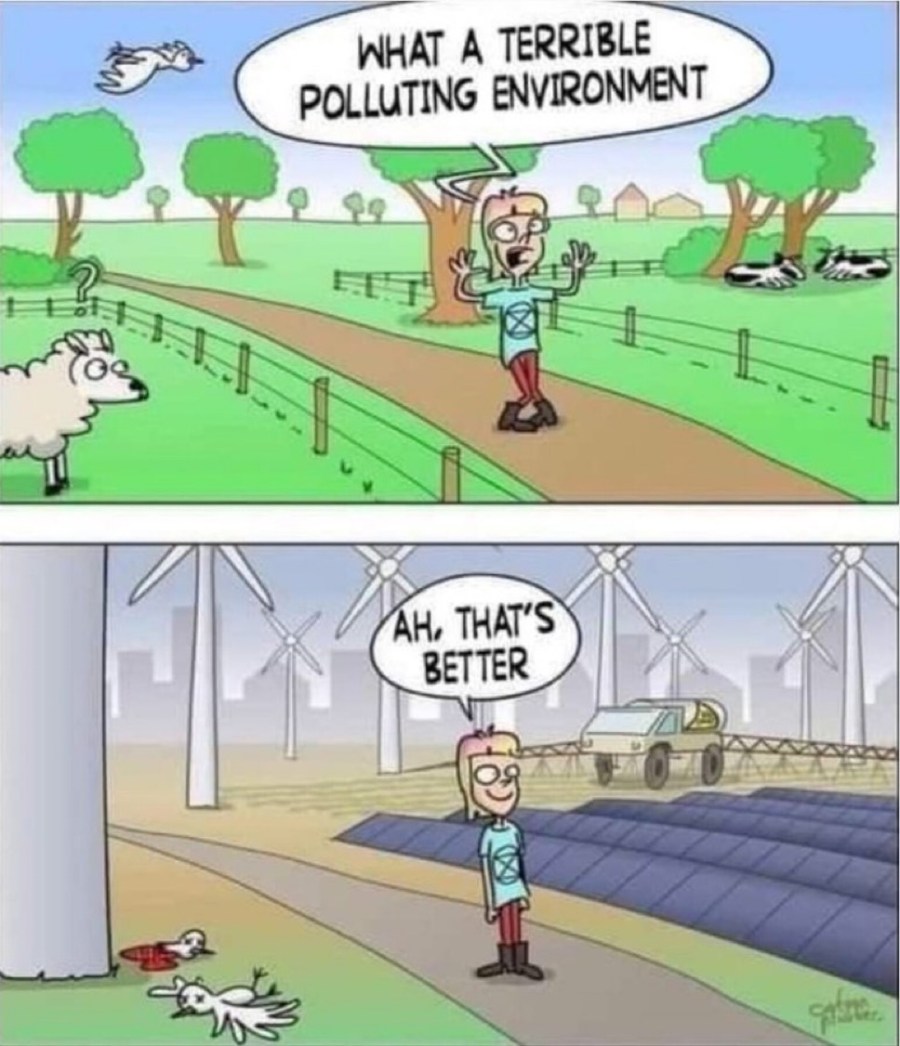
On Sunday, the Seattle Times did a long article describing how local residents are suffering from the high, and going higher, electricity rates imposed on them by their mandated supplier, Puget Sound Energy. Below, I provide quotes from the article, and my comments after each quote. The title of the article is “PSE customers hit with soaring electric bills.” I provide no link to the original article, as it is behind a paywall, and I wouldn’t pay one penny for their propaganda. You will just have to trust me that the quotes are verbatim. Emphasis in quotes is mine.
First, the bleeding-heart paragraphs on the poor Bremerton mother who can’t pay her electric bill.
This winter, Kearrah Mayovsky’s electricity bills were so high at her Bremerton home that she couldn’t pay them all. Her family of six kept the thermostat in the low 60s, unplugged used appliances and turned out lights whenever they could. Still, Mayovsky said when she received a bill of around $800 in March, she had to go on a payment plan, with $1,400 now in arrears. “Ive never been so broke in my life” she said in May. “I’ve really been just trying to get ahead, and there is like no way to get ahead.’
Please note above, no mention of a husband in the home, family of six which means herself and five children or children and elderly parent. I might like to know more about her family situation like earnings from her job, does she get state welfare payments or child support?
Puget Sound Energy customers, like Mayovsky, have felt some of the steepest increases in electricity bills in the region. The issue has reached such a peak that consumers have submitted 3,800 complaints since January over PSE’s rates, according to the Washington Utilities and Transportation Commission. … Privately-owned PSE is the state’s largest utility, serving around 1.1 million electricity customers, mostly in Western Washington. These rough financial realities for customers all point to another sign of the region’s worsening affordability crisis, especially as gasoline now tops $5.00 a gallon.
Please note the emphasis in the previous quote about PSE being privately owned. That fact will be important later in the article. We in Washington State know that the largest reasons behind the prohibitive price increases for gasoline in our state is the Climate Commitment Act, passed in 2021, that initiated a “Cap-and-Invest” (note the euphemism here) program requiring “polluters” to buy Carbon Credits from the State in order to do business here. The cost of those “carbon credits” is 100% passed along to consumers of gasoline, including all trucks and most passenger cars. High gas and higher diesel costs are included in the prices of EVERYTHING PEOPLE BUY. We have seen numerous times that the State has never published statistics on how much carbon was eliminated from the atmosphere, and how the climate has improved due to the higher taxes and gas prices. The State refuses to produce any of those statistics. Now, back to the article.
This month, publicly owned Seattle City Light has had the largest rate hike in recent memory, 9.5% for each of the next two years–or around $10 a month for most customers. But PSE has had the largest price increases in the state, and has grown more expensive than Seattle and the US on average, according to the analysis [by the US Energy Information Administration]. In just two years, PSE’s electricity prices have increased 45%, meaning the monthly bill for the average customer using 800kilowatt-hours has increased from $110 to $160. That total is around double what customers used to pay in 2020. (According to Seattle City Light, customers pay around $123 a month for that amount of energy). … Why the sharp uptick in investor-owned PSE? There are a few reasons.
Please note above the emphasis on “investor-owned” about PSE. This from a publication and a state who both love government-provided everything. City Light has had almost equivalent increases, but today PSE is the villain. Something to know about Washington-the majority of homes in the state now have electric heat and appliances. With the state’s formerly very cheap hydro-power, electric appliances were and are much more common than gas. The article doesn’t mention it, but it’s obvious that Mayovsky, the homeowner in Bremerton has an electric furnace for heating. We have a gas furnace, hot water heater, and clothes dryer, so our electricity usage is only about 600 kilowatt-hours. Another important fact not mentioned is that the state of Washington and all local utilities are engaged in a major “electrification” push. The state legislature passed a law outlawing (phasing out) ALL uses of natural gas, including home heating, appliances, and water heating, by 2050. The law outlaws natural gas with no grandfather clause, so all homeowners would be required to purchase all new electric appliances. An initiative petition repealing the law was passed on a very close vote, and the proponents of the phaseout (VERY powerful local environmental advocacy groups) immediately sued to cancel the initiative, on the basis that the people of Washington didn’t know what they were signing and passing! That suit is still in the courts, leaving homeowners unsure of whether they will be required to give up their gas appliances.
Now, to the reasons the Times suggests for the electric rate increases.
The business of running a utility has become more expensive. The region’s electricity market has grown tighter each year with growing demand. And the utilities face higher costs related to extreme weather, inflation, aging infrastructure, a tight supply chain and labor market. The elimination of some federal tax credits and climate change have only worsened things.
Let’s look at those reasons, in the circular argument. Higher electricity prices are because the utility has higher costs. All of the following factors, EVERY SINGLE ONE, are due to Government Actions. Tight market? Due to government mandating electricity. Even new buildings are required to electrify things like toilets, room lighting control, hand-washing sinks, electric hand dryers in bathrooms, etc. In Seattle, building codes require all-electric heating and appliances. Increased wildfires are caused by environmentalist-led forest non-management (trees die from bark beetle damage and are not thinned, leaving dry undergrowth that catches fire easily and burns hotter), not severe weather. Aging infrastructure is a problem everywhere, and due to higher prices for all raw materials (see high gas prices) replacement is more and more expensive every year. Delayed maintenance during the Covid lockdowns didn’t help either. and let’s not even discuss the “climate change” argument, as there is NO WAY to prove that anything at all is caused by climate change. Most Washington institutions are in deeply on the climate change hoax. Now, here’s the Really Big One.
And Northwest utilities are building and buying their way into compliance with the state’s ambitious clean energy and climate goals. PSE, for example, has built a wind farm in Montana and severed its ties to the state’s coal power, but it still has a lot of catching up to do. Then there have been regulatory changes with utilities like PSE charging more upfront partially for clean energy projects. To what degree these changes have resulted in higher consumer prices has kicked off a heated discussion on how to keep costs down while keeping electricity reliable, safe, and planet-friendly.
Let’s discuss the preceding paragraph. The first important word is COMPLIANCE. That means complying with the onerous requirements of the Climate Commitment Act. The labor hours the company has to expend on compliance are huge and getting bigger with each succeeding year. Millions of wasted man-hours are expended on proving to the State that the company is doing what is Mandated. So, PSE severed its ties to Coal Power, the least-expensive form of energy known to man except for hydro power is one immediate reason for higher costs. Then, after severing its ties with coal power, it builds large, very expensive, wind farms, which are completely unreliable, in Montana! The cost of transmission from Montana to Washington is huge too. Washington’s mandates for so-called “clean energy projects” do nothing but increase costs and provide unreliable, variable energy which makes the Leftist politicians feel good, and throws many citizens into energy poverty.
In Washington State, we have very powerful assistant attorneys general (a large number, larger than in many other states), whose attitude toward private industry ranges from skeptical to outright hostile. They are out to beat the private energy companies into submission.
To consumer advocates and Washington’s Assistant Attorneys General, who review rate increases on behalf of the public, the price hikes echo concerns they’ve had for years. They say the Washington Utilities and Transportation Commission, which regulates privately owned utilities, has protected utility investors over consumers’ wallets.
The Public is assumed to be all leftist, like they are, and all believe that private utilities are operating in opposition to their customers. Basically the utilities are operating on Government Mandates that by their nature increase costs and prices for customers, but the State has no idea how things work in the private sector, and never have. Here’s some commentary from a local press outlet not the Fishwrap.
The 30% rate increase PSE wants by 2029 is the part nobody’s bracing for
The 12% was the warm-up.
PSE has now gone back to the UTC, asking to raise electric rates by nearly 30% and gas rates by nearly 20% by 2029.
Thirty percent. On top of what already went up this year.
PSE says it wouldn’t be fair to pin the whole request on climate policy. But the company’s own numbers tell the story. PSE said about $4 billion of its $9 billion rate request is to comply with CETA’s renewable requirements. Nearly half the ask is for the mandate alone.
Back to the Times article.
In the paragraph about rate-making changing, this stood out for me.
There’s been a large increase in demand the region’s aging grid from electrification and population growth, and new power sources haven’t been built to match. While PSE doesn’t have a significant number of data centers in its service area, tech companies and data centers are competing for electricity on the wholesale market, also leading to higher prices.
Well, when new power sources MUST be “renewable”, they simply cannot be built to match. It’s NOT physically possible to cover all power needs with unreliable and expensive “renewable” power sources. And when the state’s most renewable and carbon-free power source, hydro power is being DECREASED by tearing down dams (ostensibly to save fish runs), things really get ridiculous. Then, there’s the article’s obligatory paragraph on how climate change is behind everything. Please don’t laugh too loud when reading this.
Climate change in particular has made electricity more expensive. Once-reliable hydropower has become variable due to drought. Heat waves and cold snaps, supercharged by climate change, have led to eyewaterinw wholesale electricity prices that have burned utility dollars. The risk of catastrophic wildfire has also become an existential threat for utilities, leading to higher insurance premiums.
Every sentence in the preceding paragraph is false. Climate change is not a cause of any of those things, and the state continues to decline based on a false premise. Now, here’s the money paragraph. The reason for the season in Washington State.
The second reason is that in 2019 and 2021 Washington passed ambitious climate goals that would require utilities to significantly reduce carbon emissions and end the use of fossil fuels to generate electricity by 2050.
First, the total falsity of reducing carbon emissions. The CCA and its huge price increases on gasoline are designed to get rid of all internal-combustion-engine cars to “save the planet.” The State has refused to release ANY statistics on how much emissions have been reduced! We will never know if the goals are being met, and the state doesn’t care and stiff arms the public when we request the information. Phasing out “fossil fuels” usage will only reduce the state to penury and poverty, cause more people to leave the state entirely.
This was going to be especially difficult for PSE, which has historically relied on coal and natural gas to generate about half of its electricity. The utility serves around a third of the state’s electricity customers and has more than twice the number of customers of the next-largest utility in the state. Achieving these climate goals would require significant money to purchase or build solar, wind, battery, and hydro resources.
Note that the resources listed above for achieving climate goals exclude the most reliable means of carbon-free electricity generation: Nuclear. About 50 years ago, Washington had a very bad experience with nuclear power, and now the climate activists who run the state refuse to even consider it. Solar and wind are as unreliable and variable as can be, and have very short service lives. Like this.
Huge investments in “renewable” energy, destroyed in minutes by Weather. But our state insists on impoverishing its citizens with huge energy price increases, mandated electricity everywhere, in service of a lie. But not everyone is impoverished. The executives of the climate advocacy groups, the plaintiffs lawyers who sue to stop reliable projects, and the executives of the “green energy” companies building the renewable resources that need to be removed and replaced in a few year, are making out like thieves. And guess who they donate campaign cash to? The Democrats who run the State of Washington. Climate grift enriches the “clean energy” industry and politicians, while driving out taxpaying citizens.
And the Seattle Fishwrap is right there promoting it all day long.
 Calling-all-RushBabes